Walk in the Wissahickon
an installation at the
Helen Millard Children’s Gallery at Woodmere Art Museum
September 13 - October 26, 2025
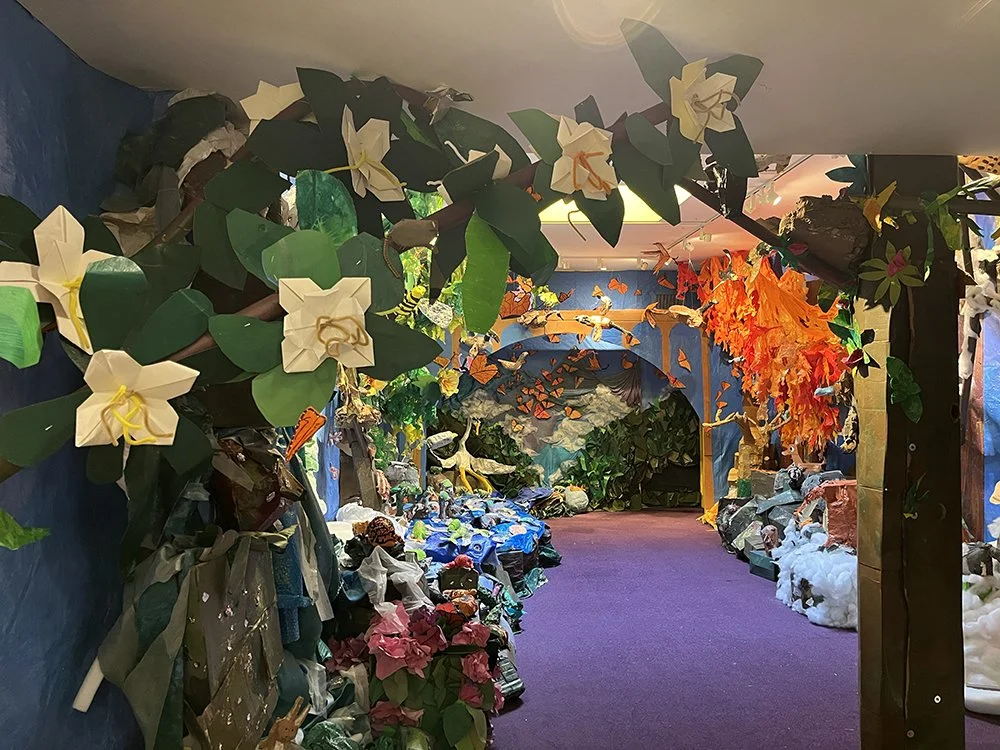
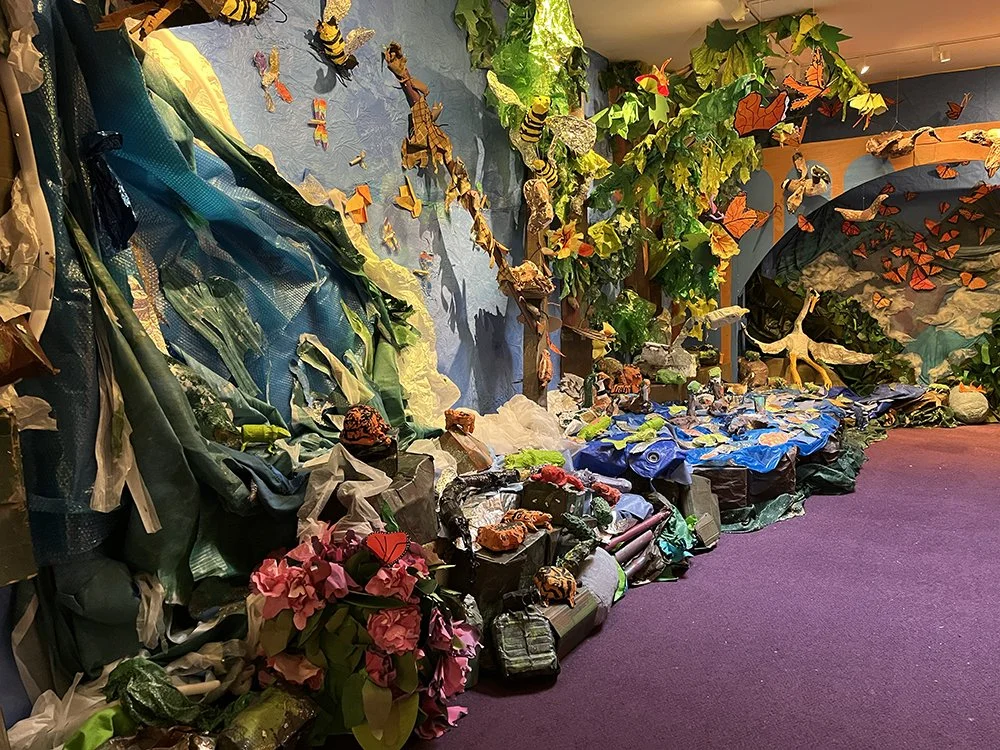
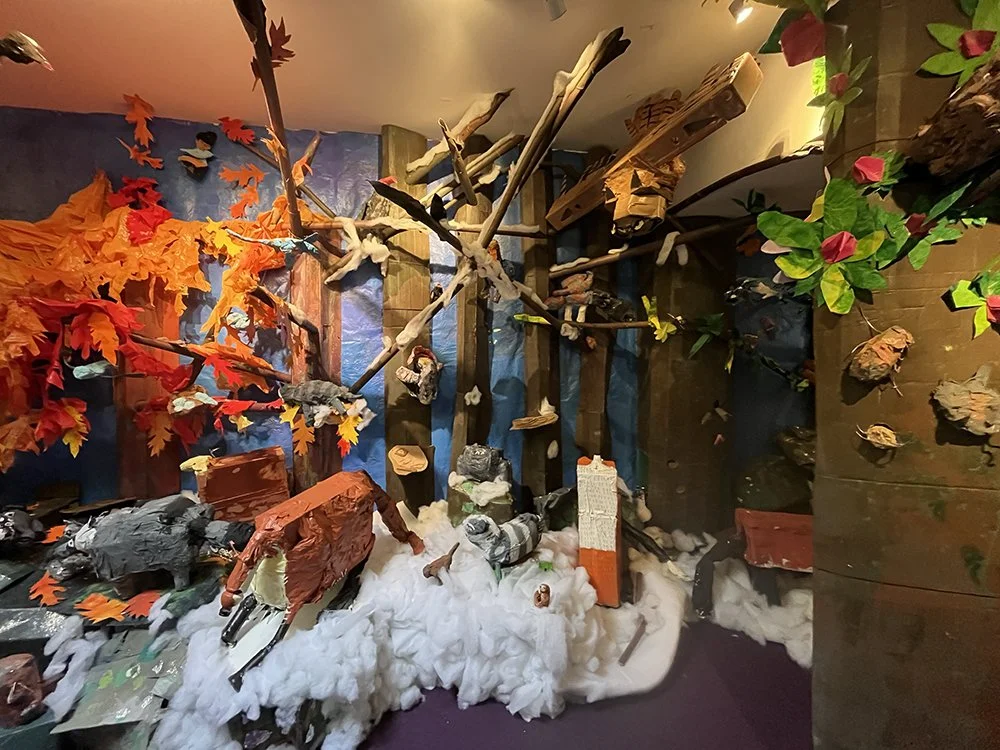
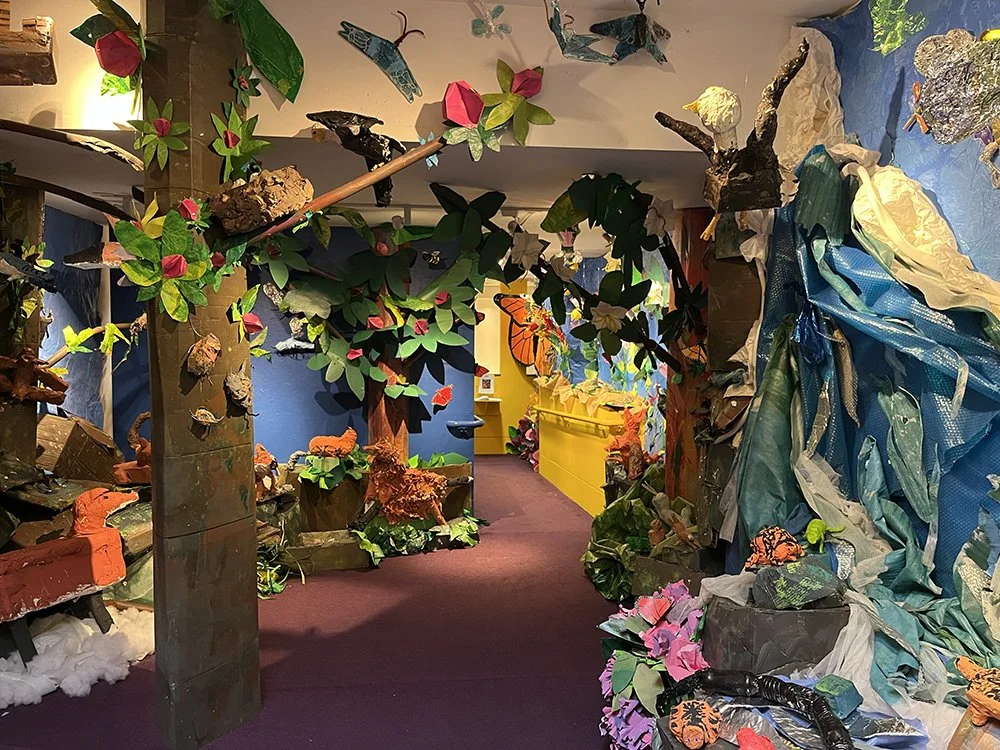
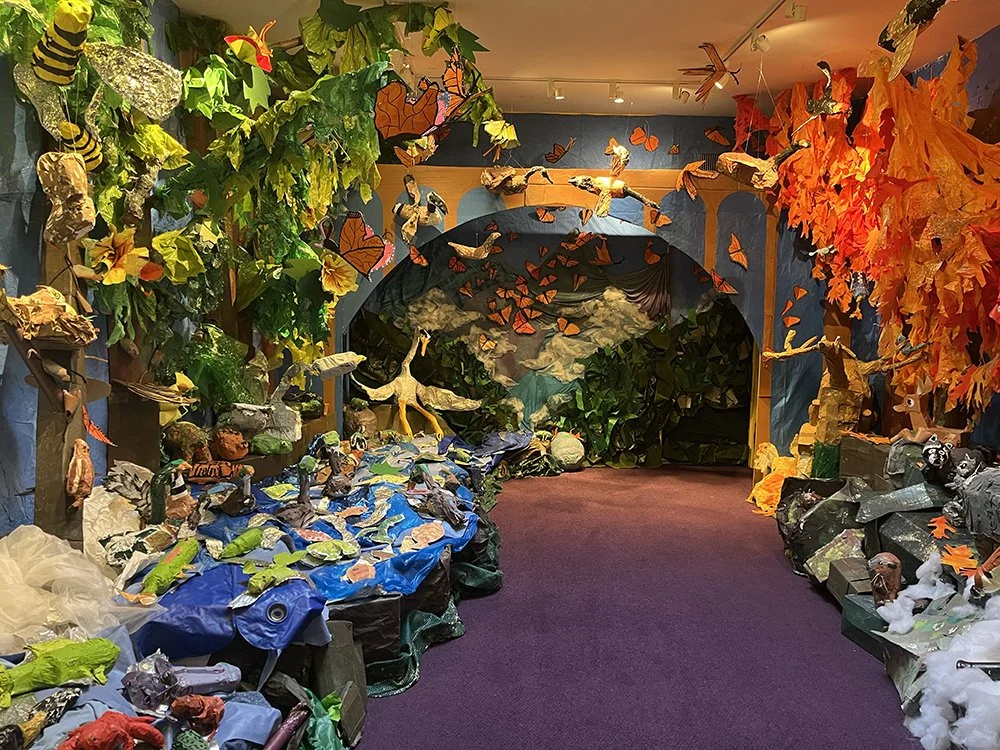
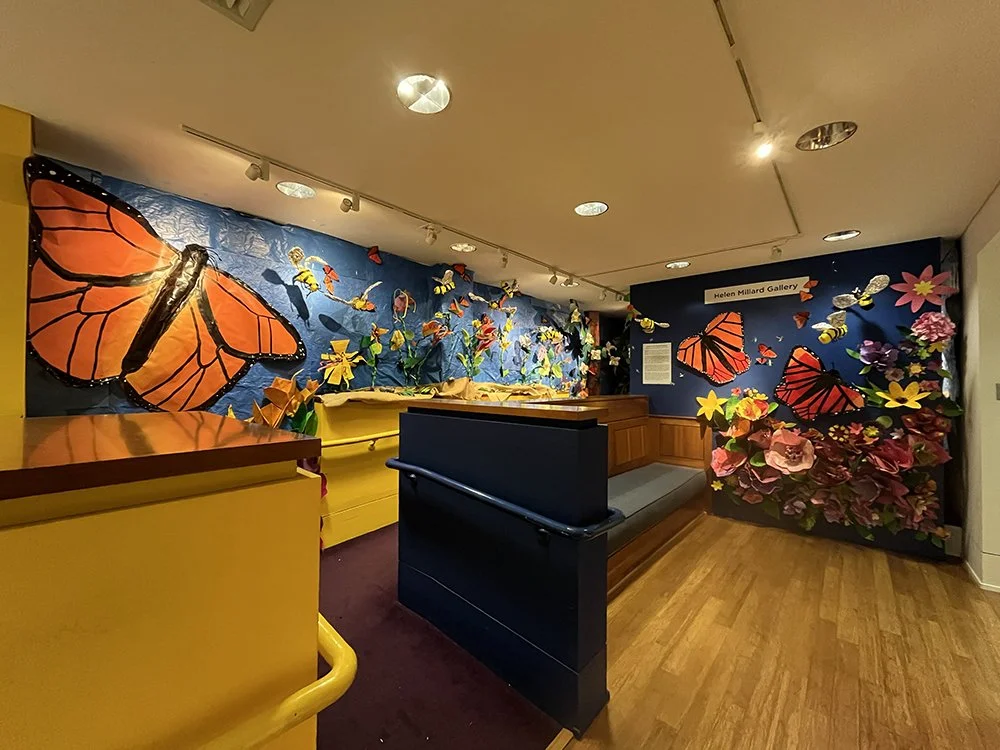
Walk in the Wissahickon is an immersive installation that celebrates the history and wildness of Wissahickon Valley Park, a vast 2,000-acre watershed park located in Northwest Philadelphia. Its forest, geology, and creek create an abundant habitat for many species of flora and fauna.
This installation was created by a diverse group of artists, 6 to 21 years old, under the direction of Mindy Flexer, at Woodmere Art Museum, Mindy Flexer Art School, H.A. Brown Elementary School, Harmony Hometeam After-School Program, and Germantown Friends School’s Summer Camps. It invites us to reflect on how people and nature influence each other and to be responsible stewards of our natural treasures.
The young artists in Walk in the Wissahickon used their creativity to learn, to inspire each other, and to create an ecosystem none of us could have envisioned before we all started. They went beyond themselves by truly being themselves, together. May working together in the studio be a template for working together in the world to care for our precious planet and its wild places, both near and far.
Our Process
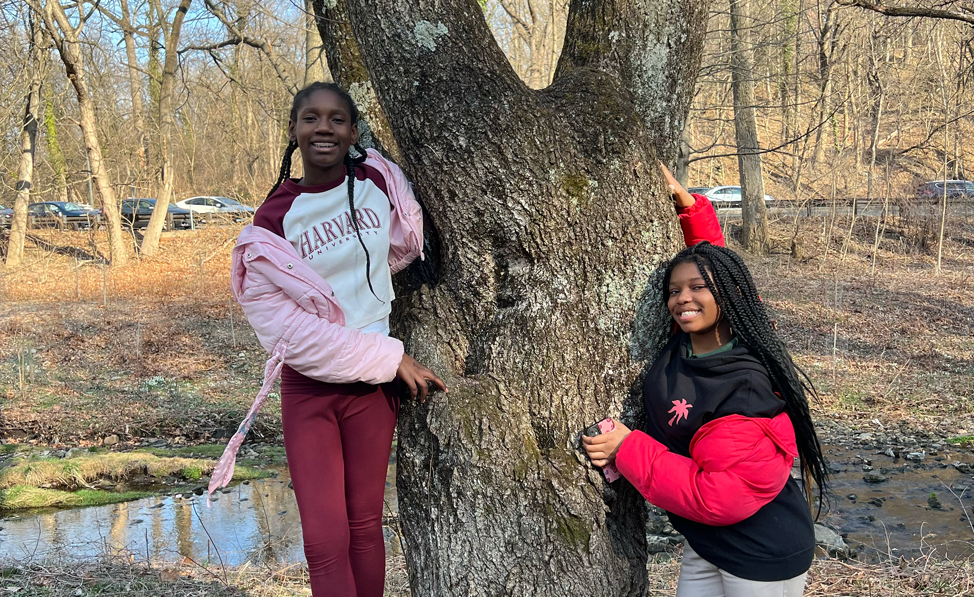
Our choice to create a local ecosystem this year meant we could see it in person. Artists from the Harmony HomeTeam and H.A. Brown Elementary School were able to visit Wissahickon Valley Park on field trips, and others visited with their families.
For some, Wissahickon Valley Park was a familiar place, and for others, it was a revelation. For everyone, it can become a beloved place to visit over and over.
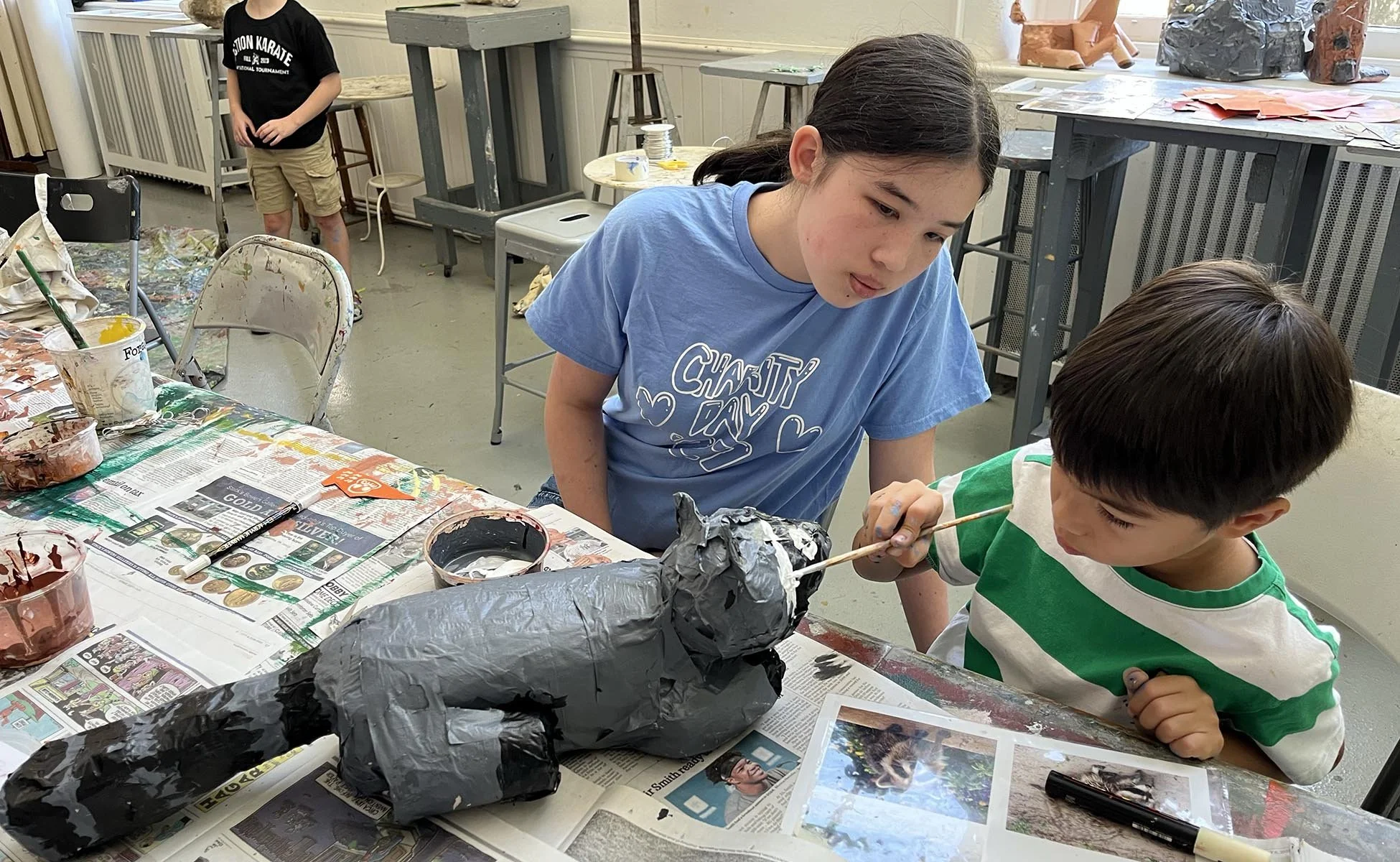
As artists created the Wissahickon’s critters, we realized how many different animal families live there, and how many different species are in each family.
We also learned about how they all work together to create an ecosystem.
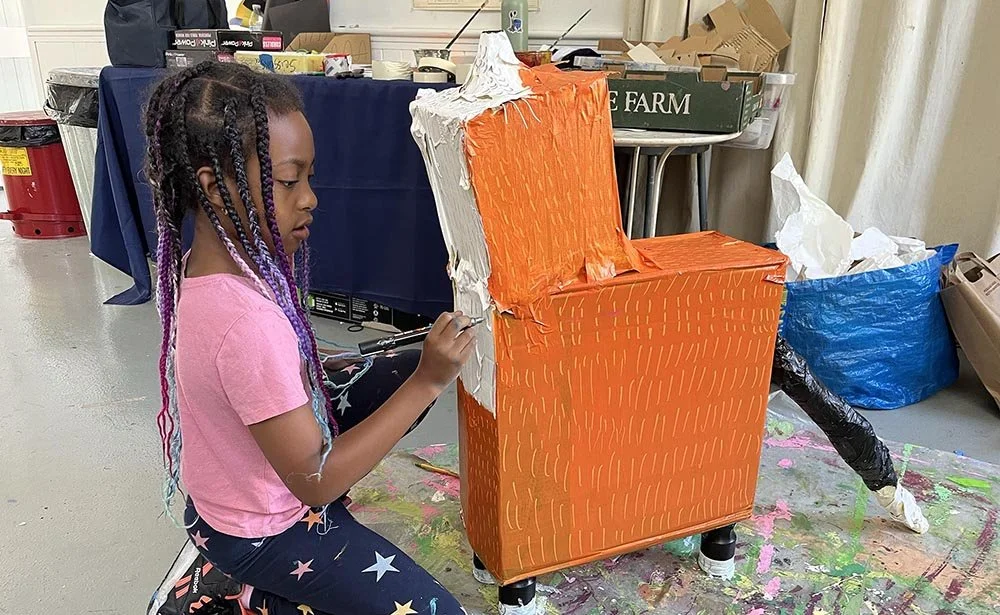
Each artist got to do their own work, to help other artists, and to receive help themselves.
Different artists became expert at different things, and were generous about sharing their newly acquired expertise. We all moved forward together.
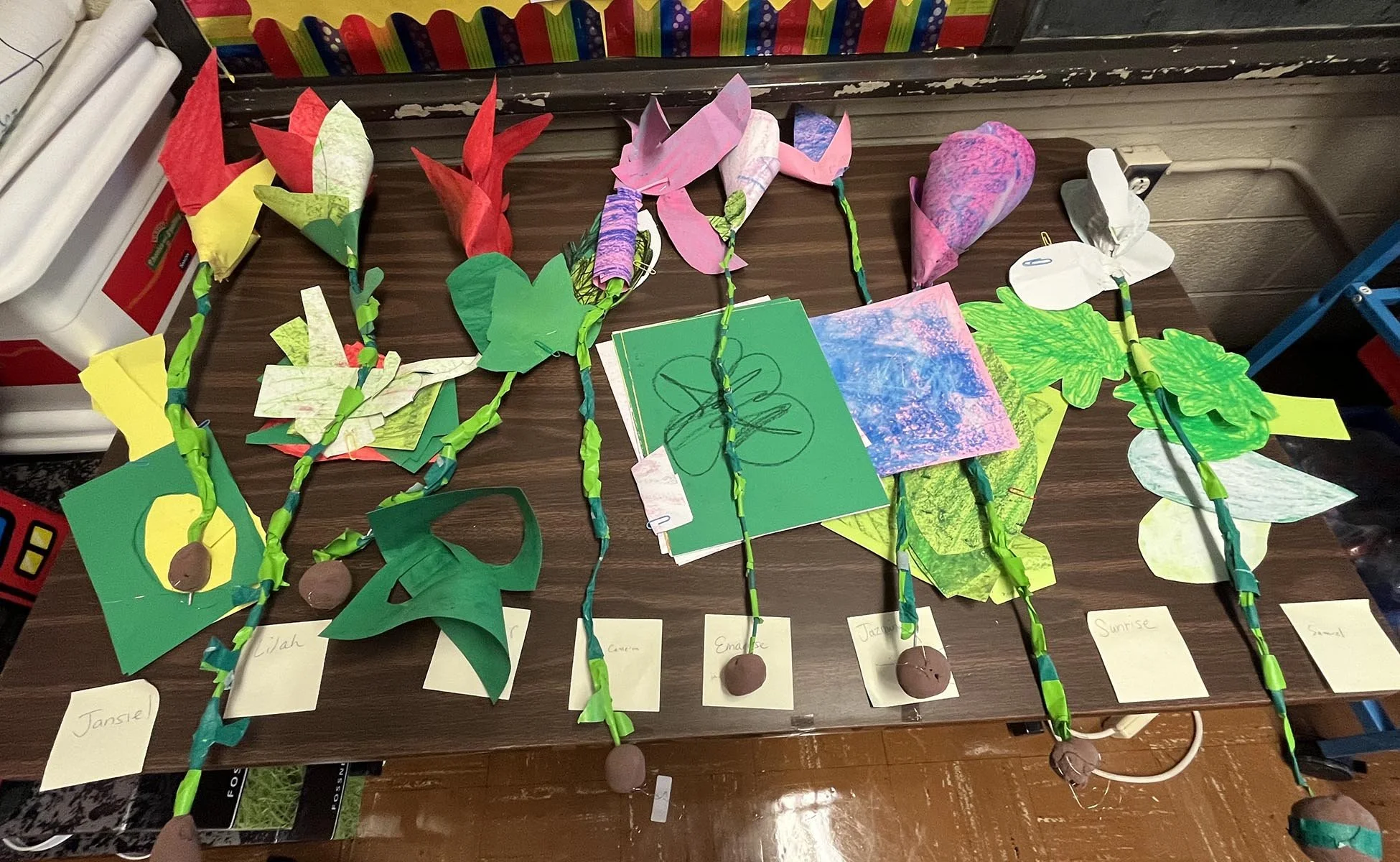
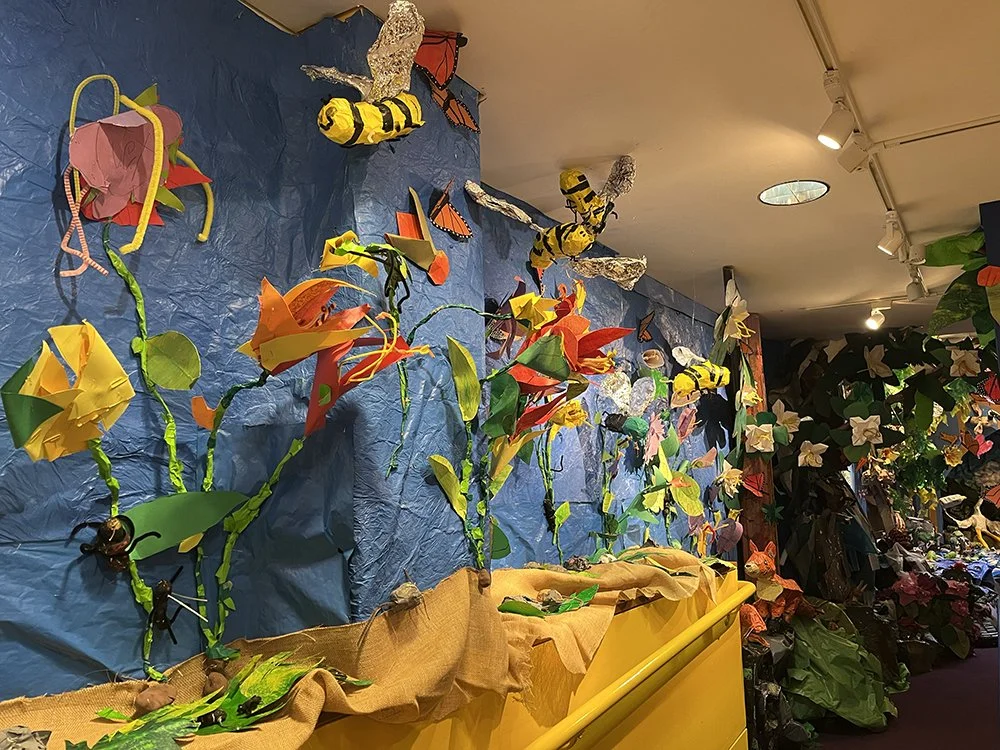
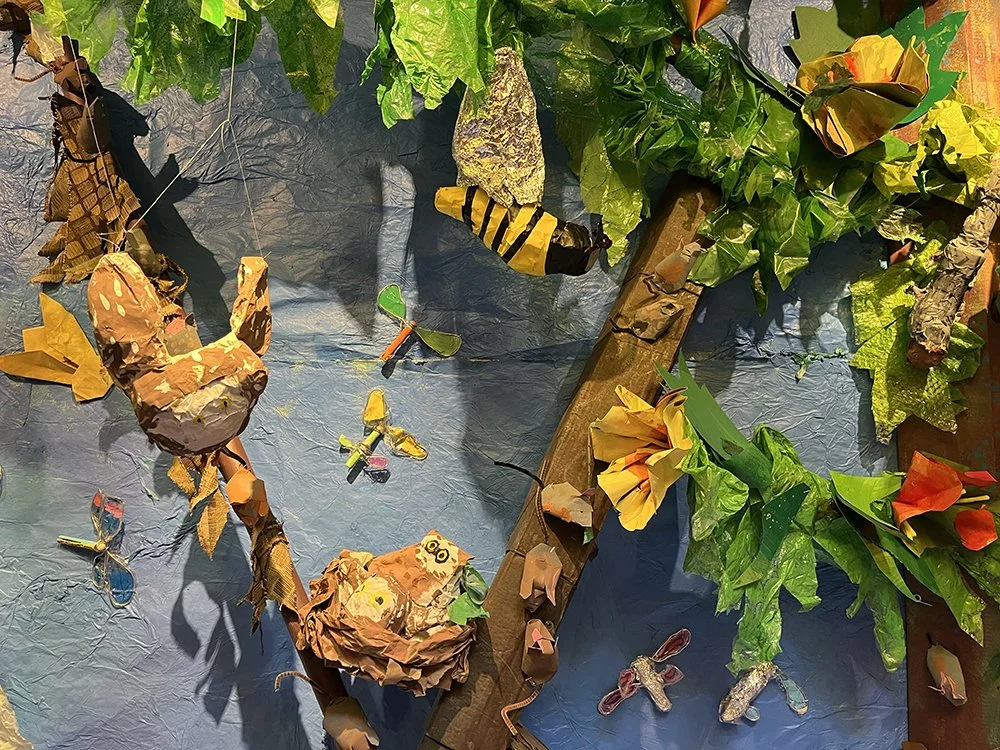
We learned that the plants in the Wissahickon are as varied as the animals. Artists at H.A. Brown Elementary School made trillium, trout lillies, and Virginia bluebells, and bees to go with them, as part of their study of pollination.
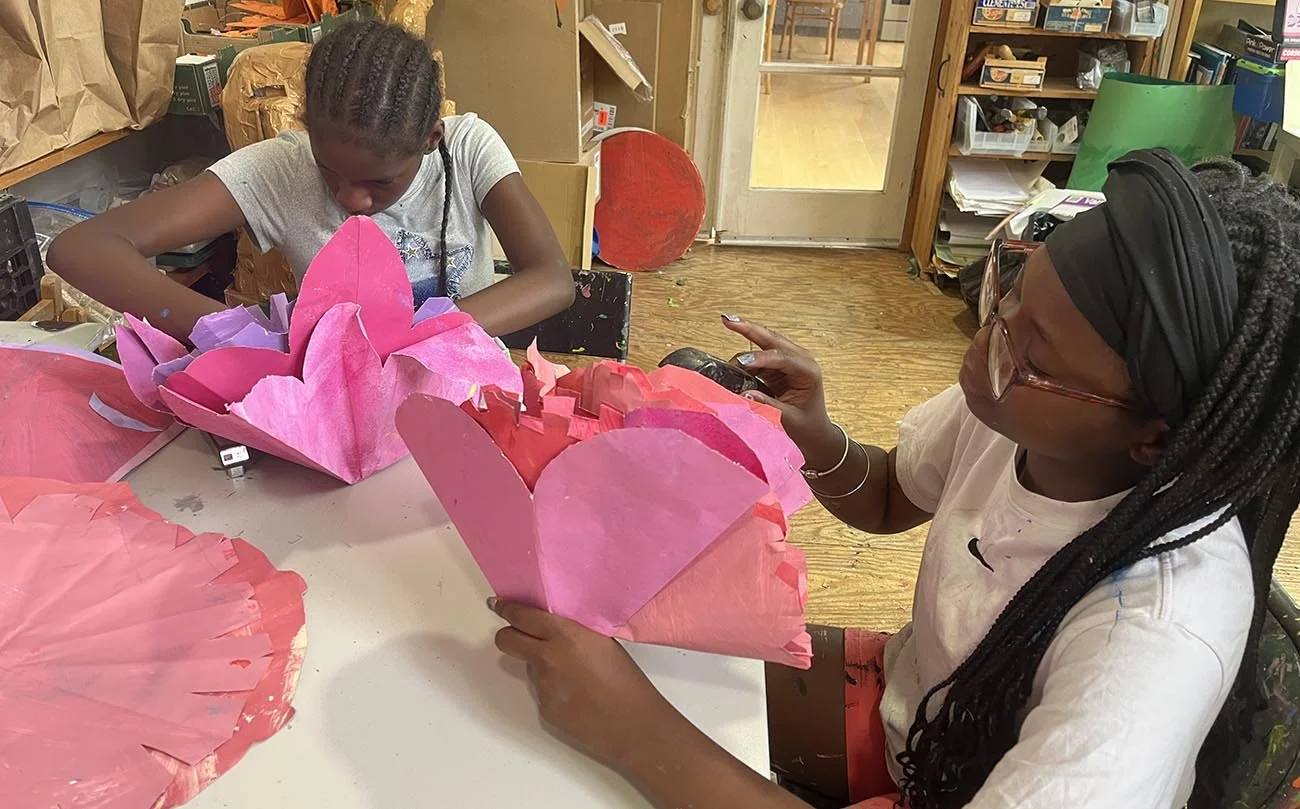
Zady, an alumna of Mindy Flexer Art School who is now in college, figured out how to teach other artists to make flowers for a rhododendron bush.
Making big things is an exciting challenge! After the first rhododendron bush, Cady and Scotlynne experimented to find many different ways of making larger versions.
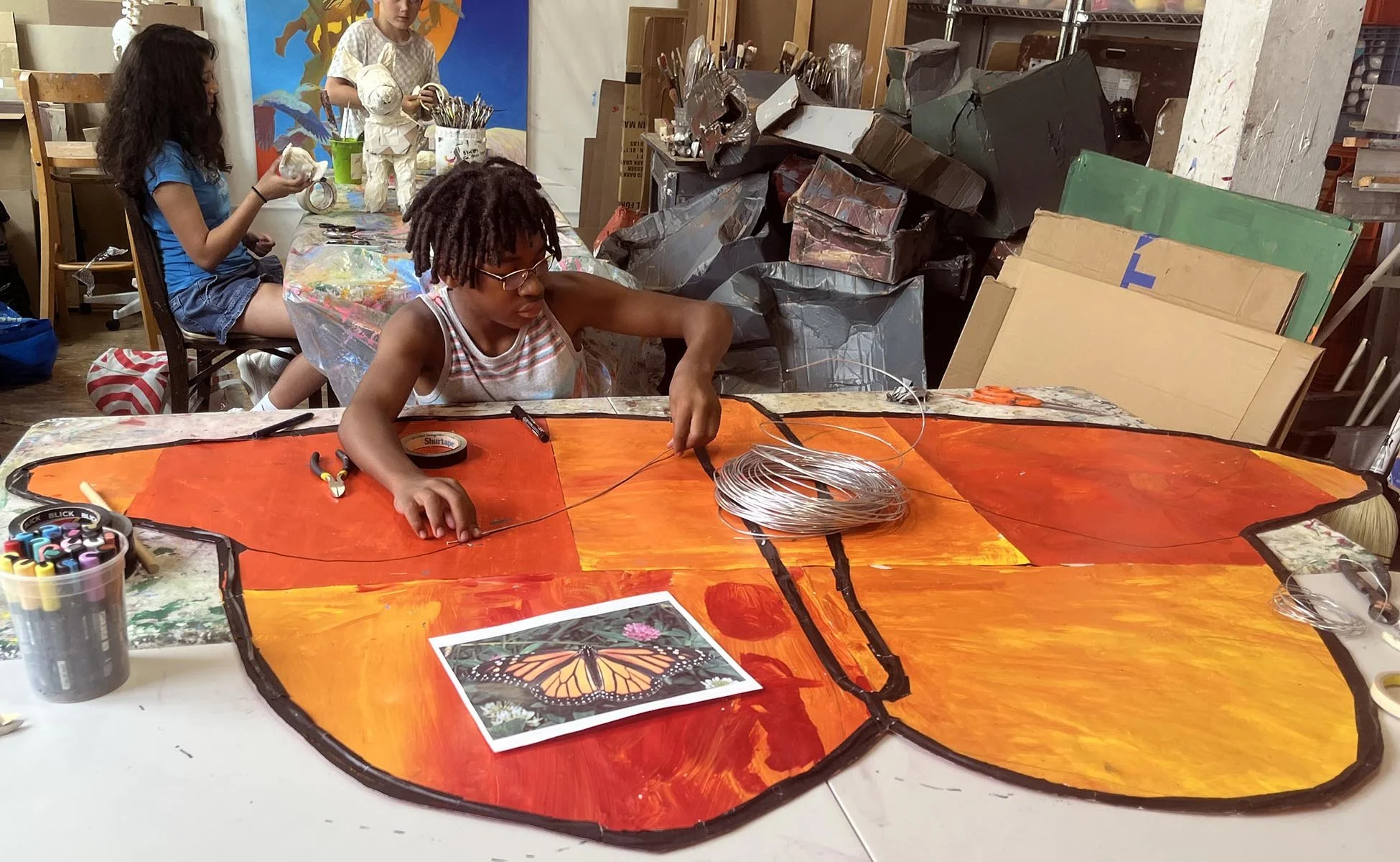
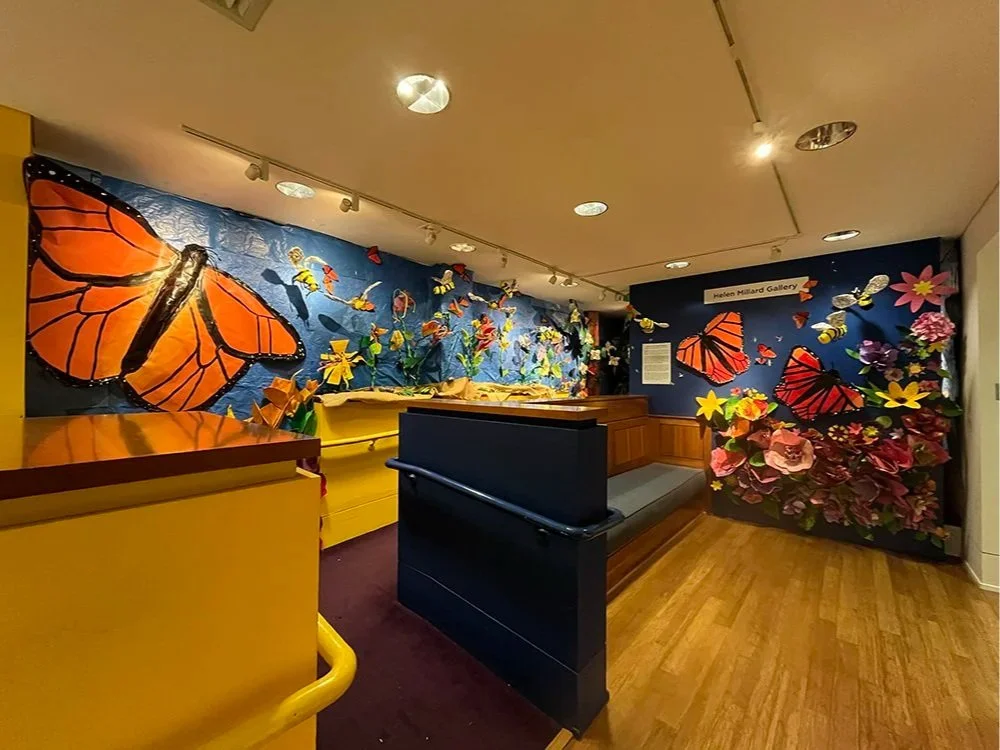
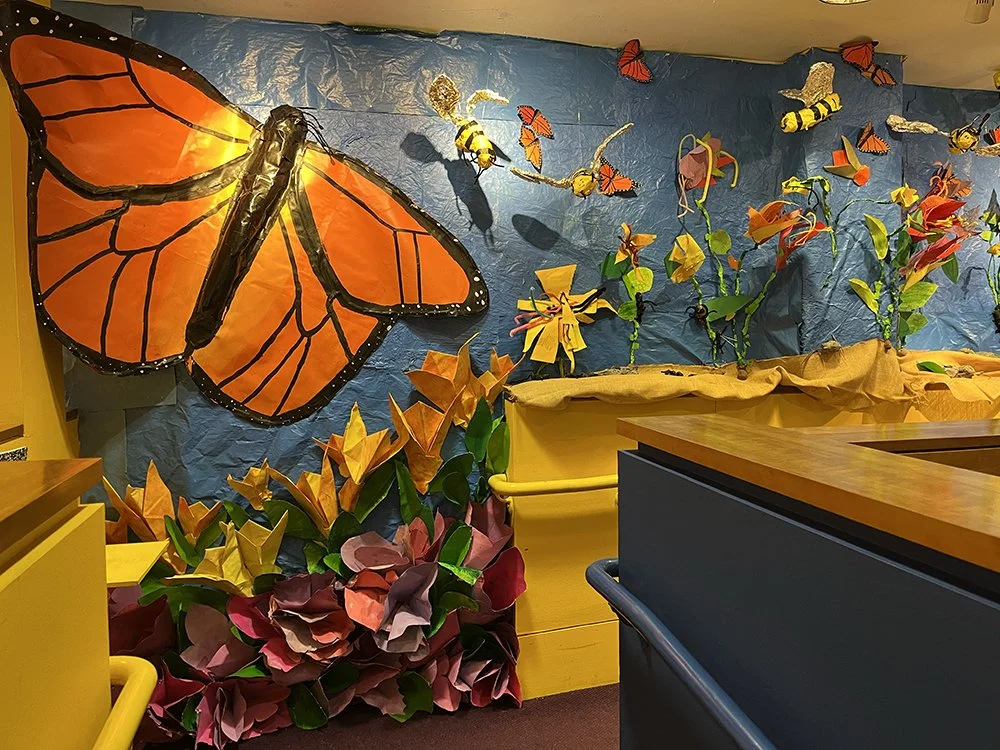
After learning about monarch butterfly migration, Jelani figured out how to create a huge butterly and hide the wire structure it needed to support itself. These big artworks became some of the visual themes of the show.
Collaboration was an essential part of all that we did. It was exciting for artists to create things together that were different from what either of them would have created alone.
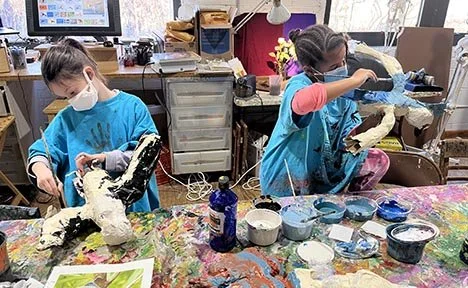
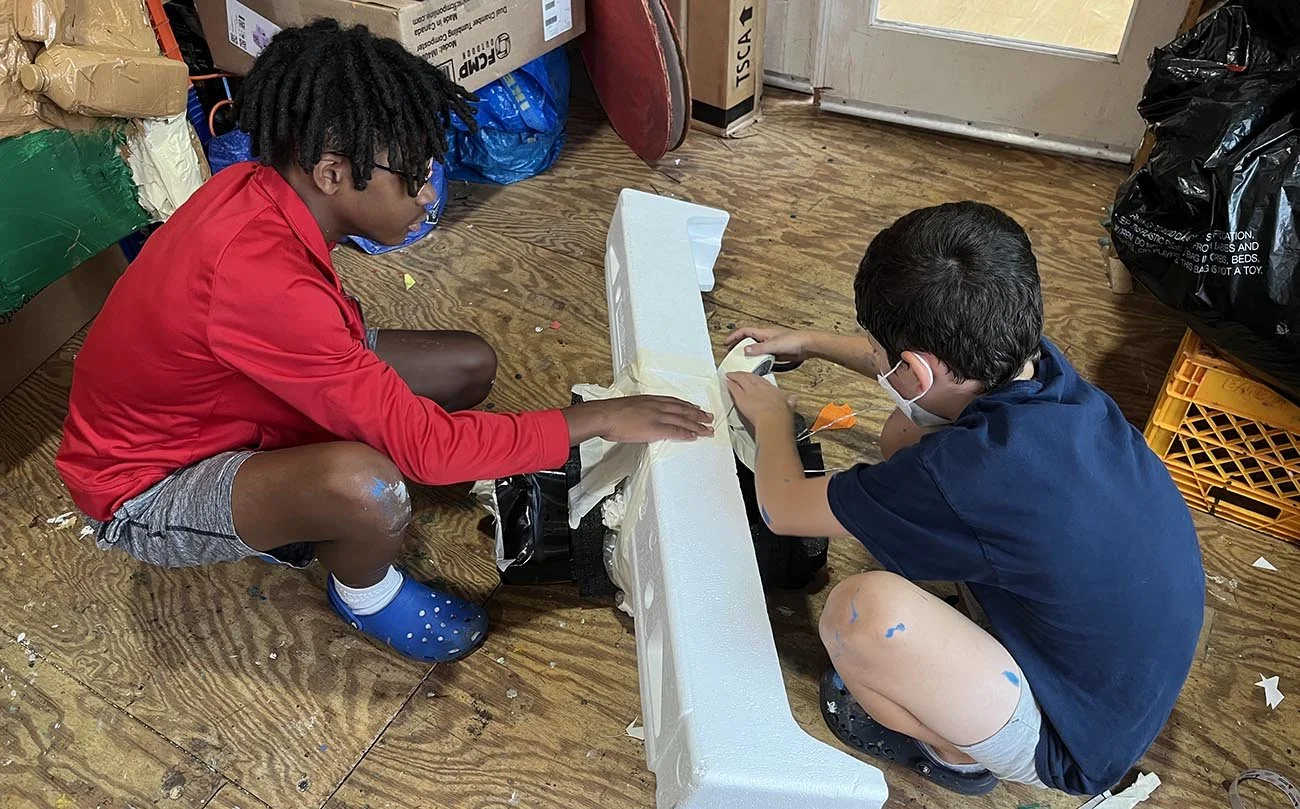
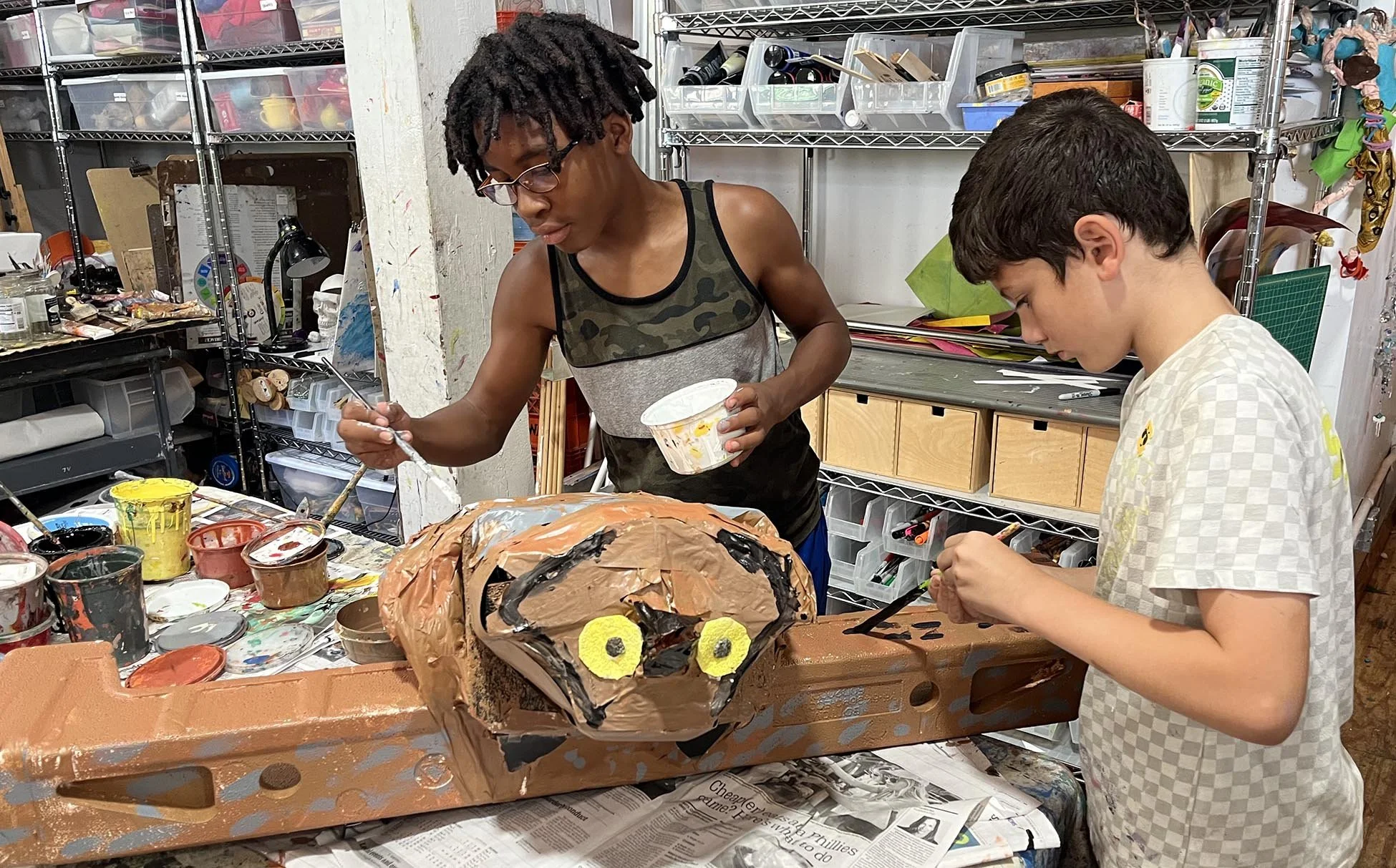
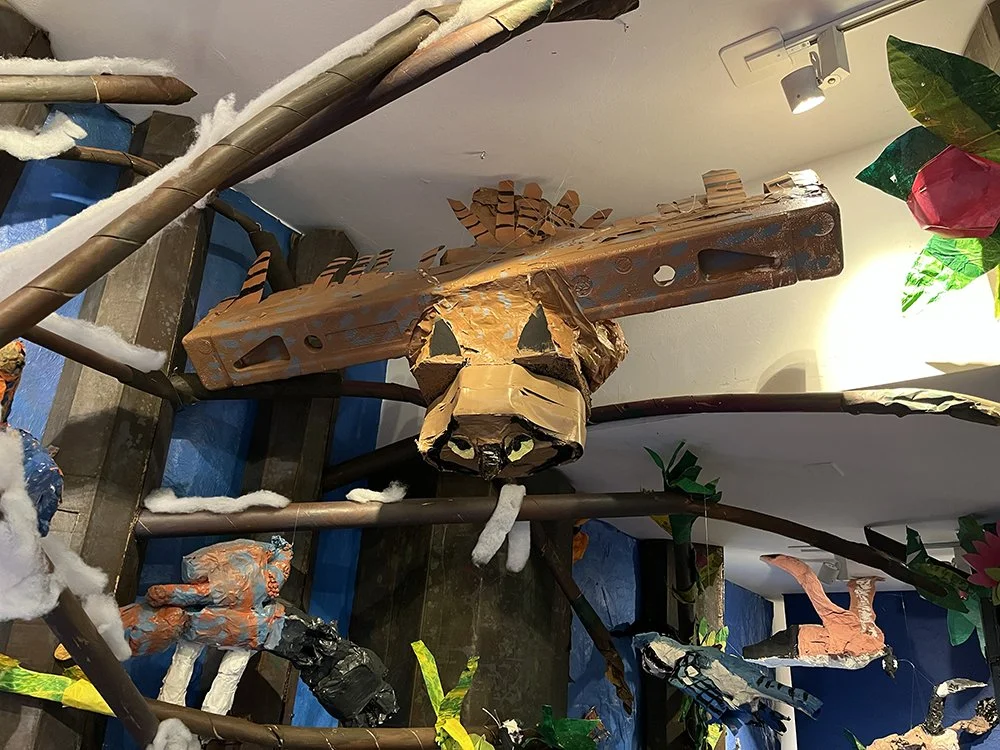
We were all amazed by seeing the step-by-step process Jelani and Calder used to turn styrofoam packing pieces into a great horned owl.
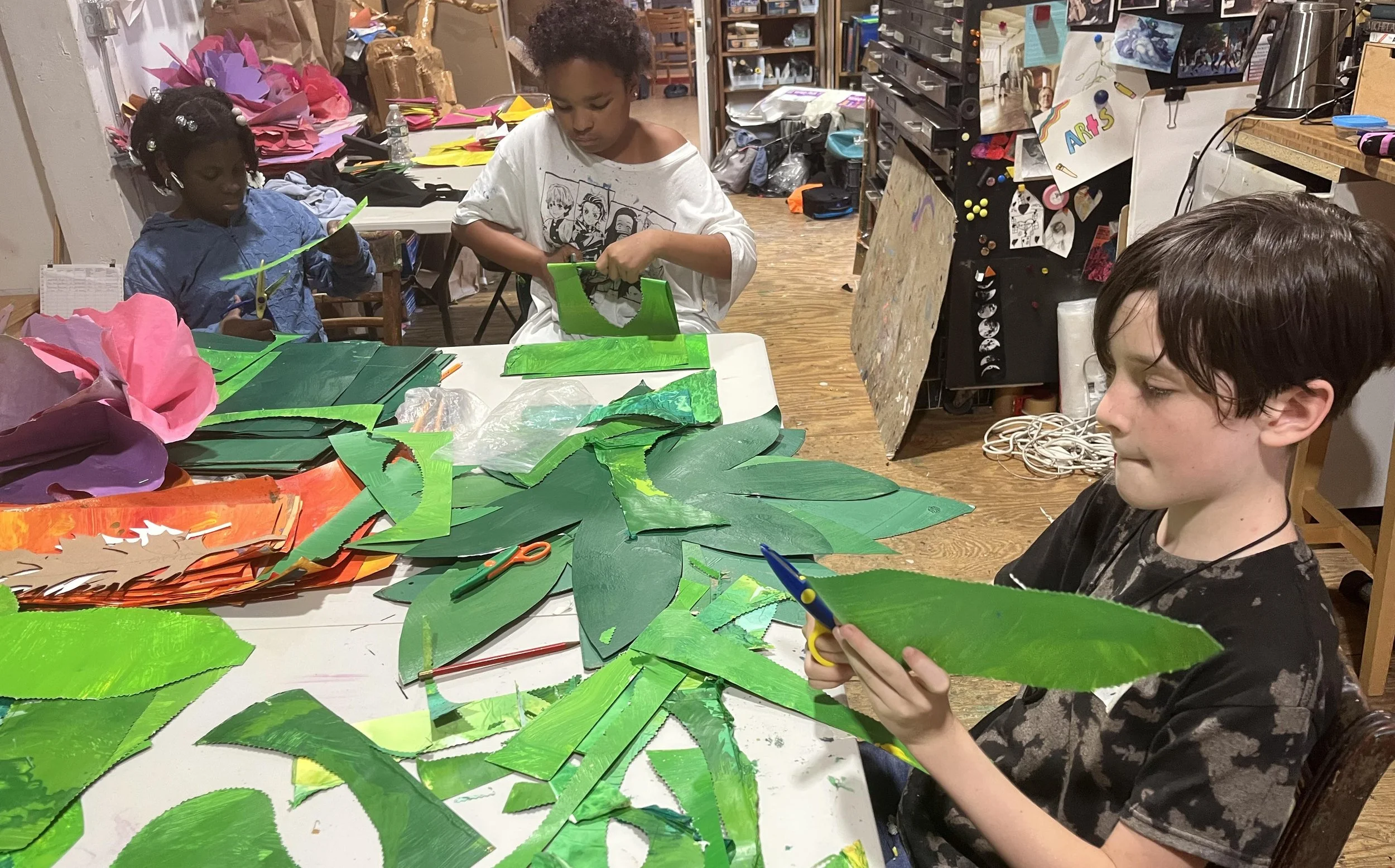
Though many different kinds of trees grow in the Wissahickon, we chose three iconic species to show the changing seasons: umbrella magnolias and tulip poplars for spring and summer, and oak trees for fall.
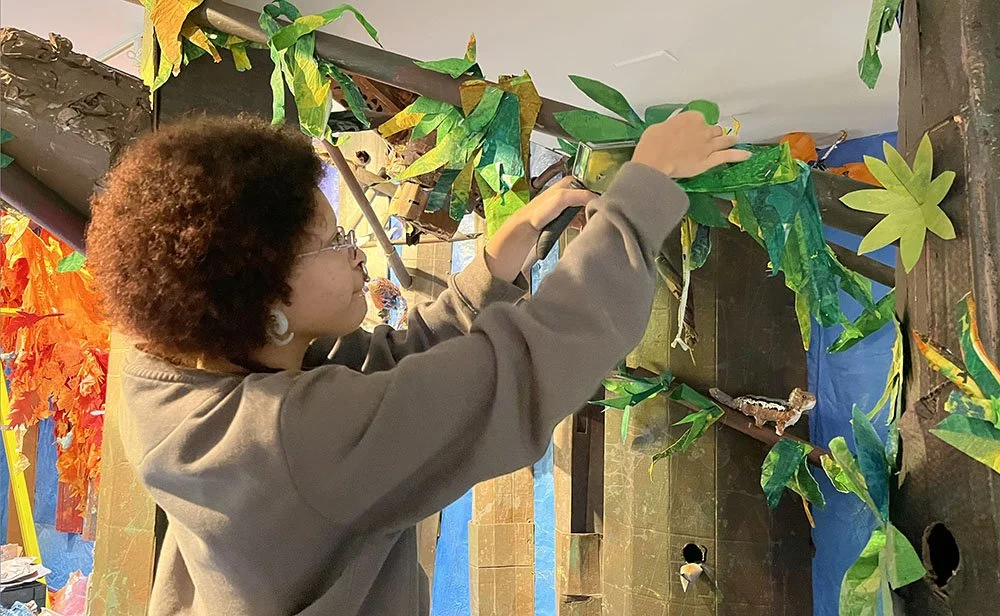
Painting leaf paper and cutting leaves all summer gave us a real appreciation of the work of both trees and leaves!
One of the special things about Wissahickon Valley Park is its rocks, and we were amazed that they had orginally been part of a mountain range as high as the Himalayas.
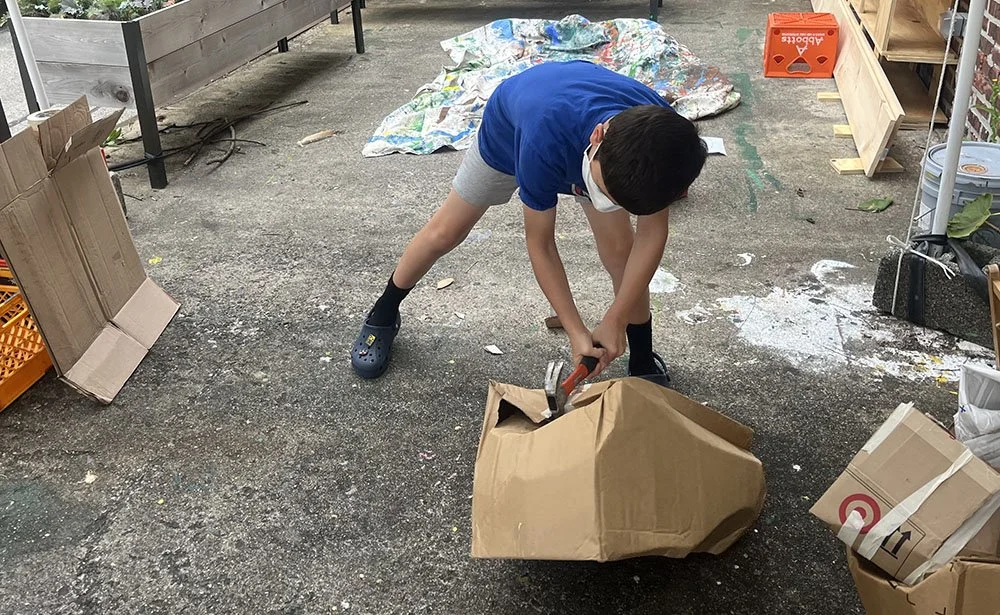
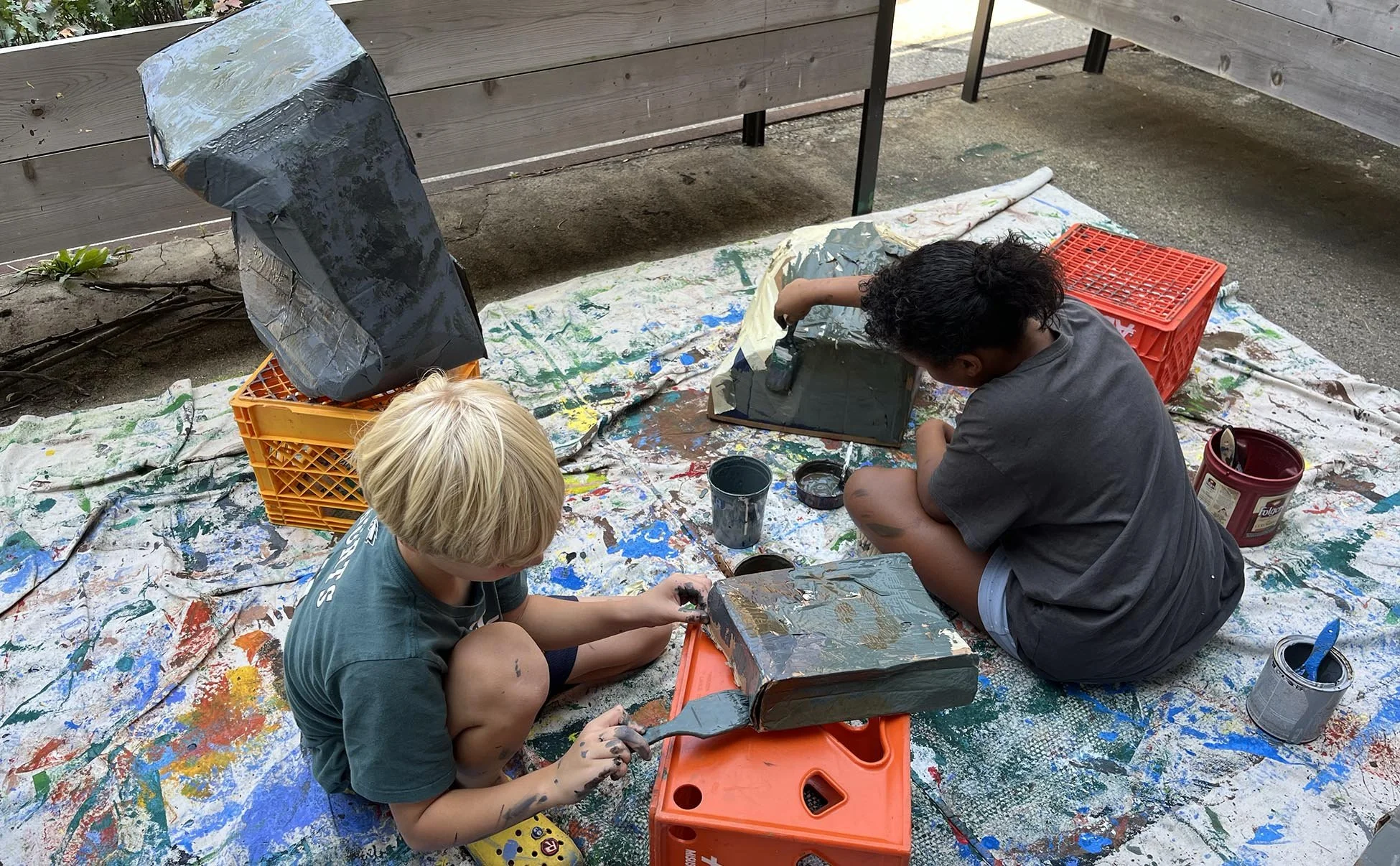
We made our own Wissahickon schist by hammering boxes, painting them, sponging on moss and lichen, and gluing on tin foil and glitter to be sparkling mica.
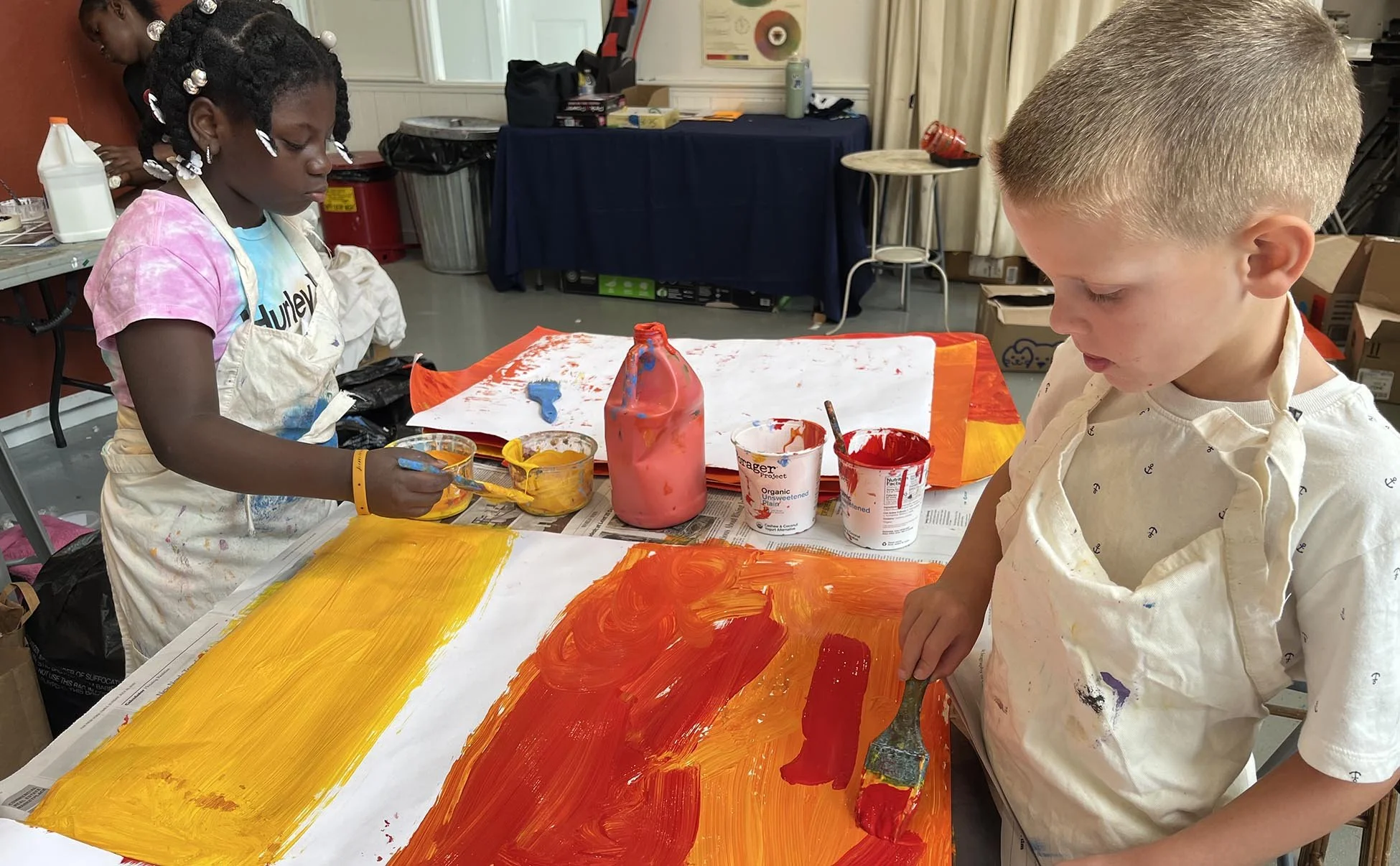
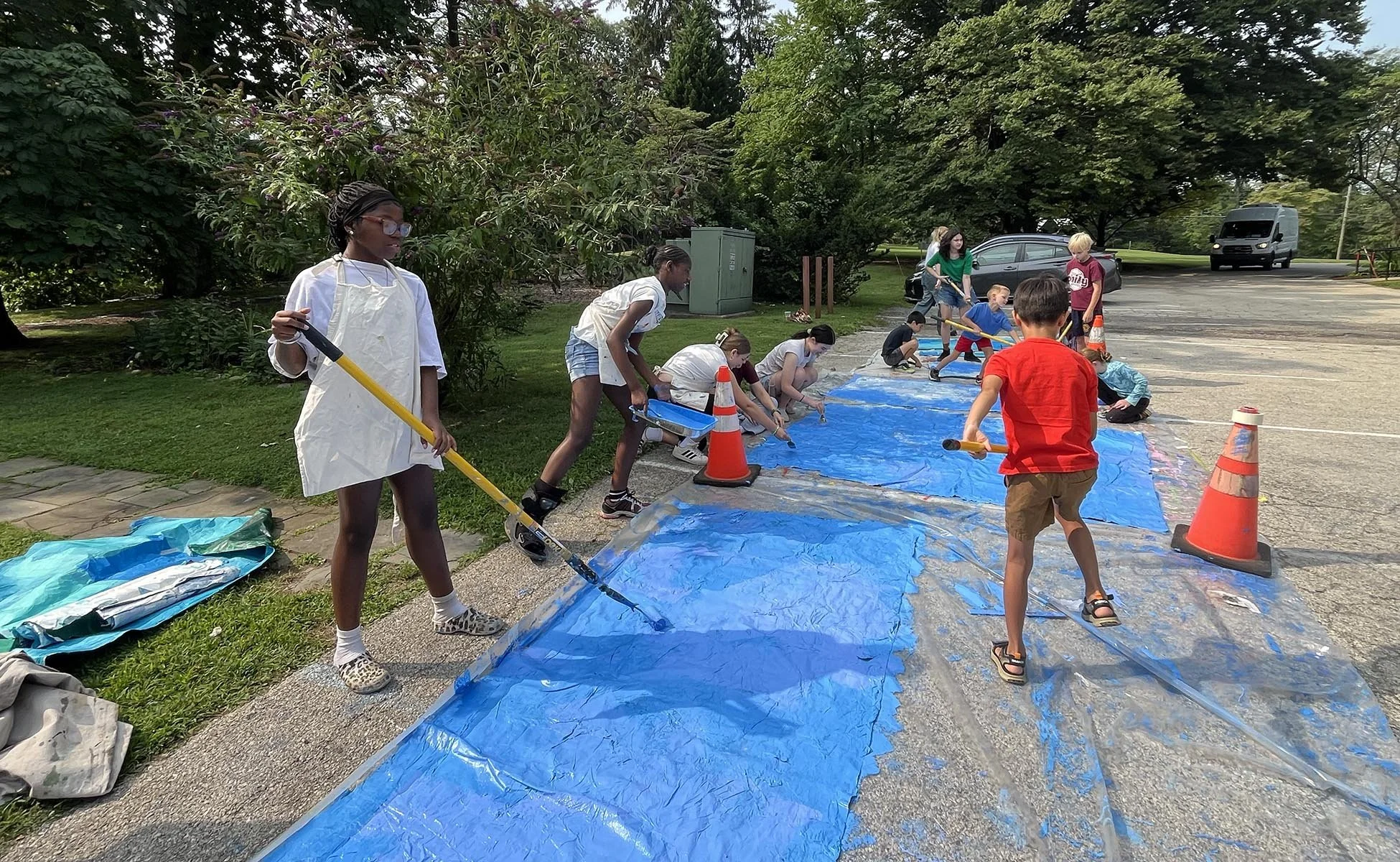
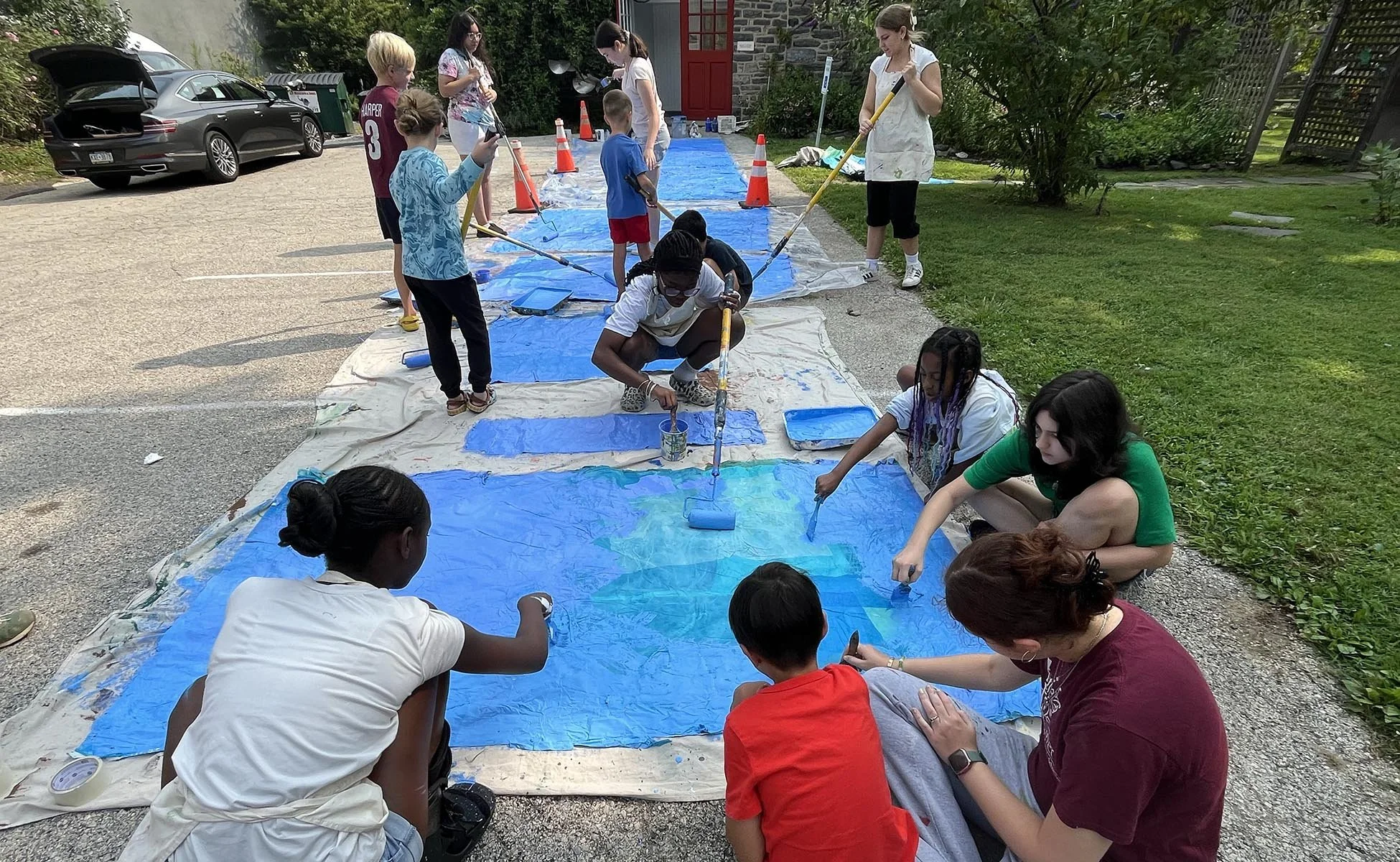
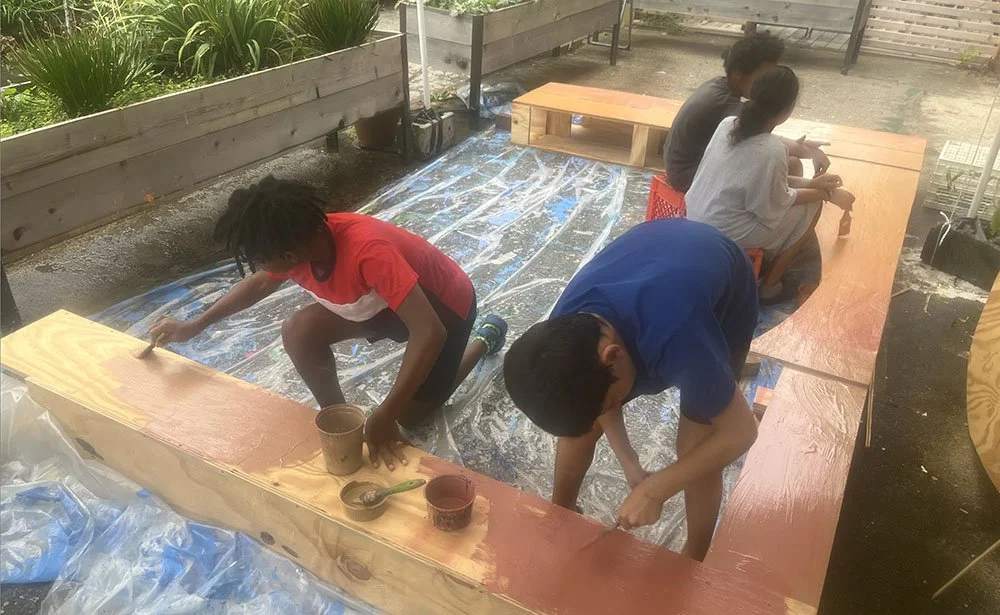
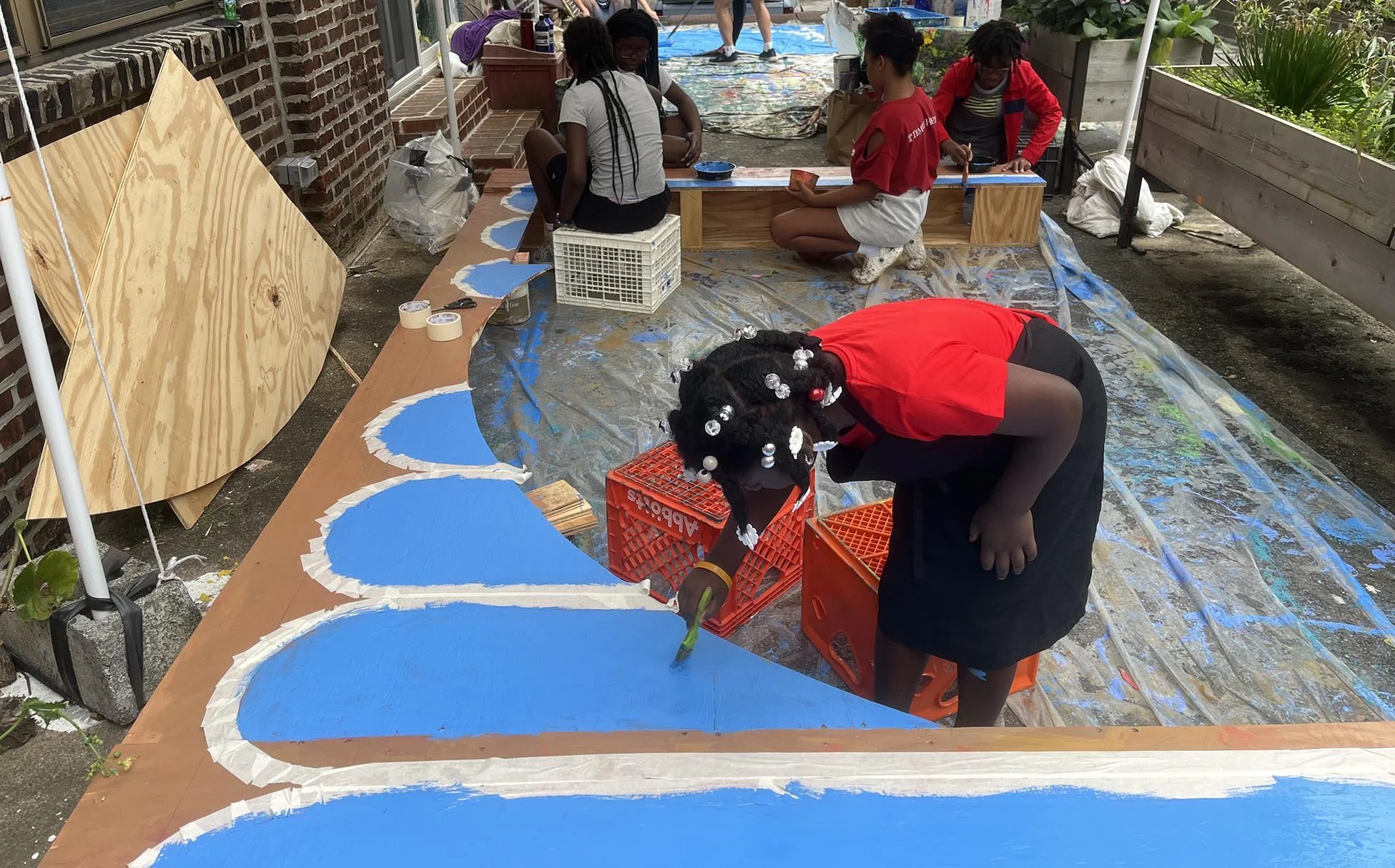
We learned a lot about process and teamwork when we started every morning class at Woodmere Art Museum by painting chunks of the sky and river. We got better at it every day, and artists of all ages were excited about the group energy, the color energy, and painting things that were bigger than anyone had ever painted before.
Artists took shifts preparing the surfaces, mixing the paint, rolling it on, and organizing our work area. Our group bonded by working together to accomplish a big task.
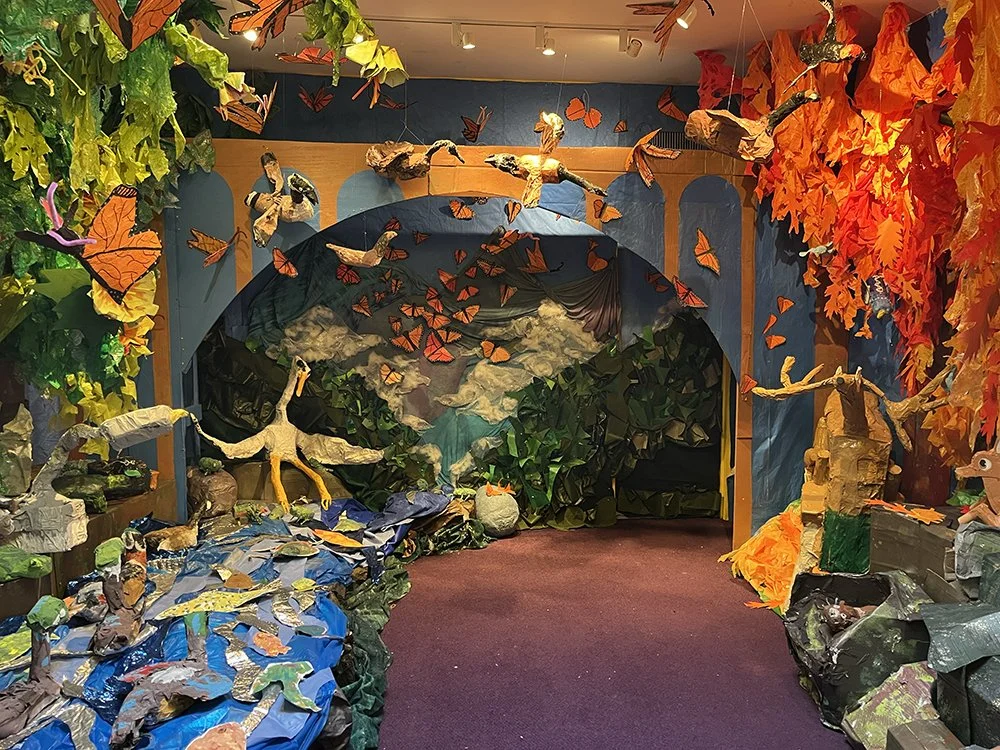
The iconic Henry Avenue Brigde became another opportunity for teamwork, and gave us a new appreciation for all the engineering that went into making the original bridge, at a time when there was far less technology than there is today.
Thanks to the inimitable Frank Palmieri for building it for us. It was exciting to see it come to life as we painted it!
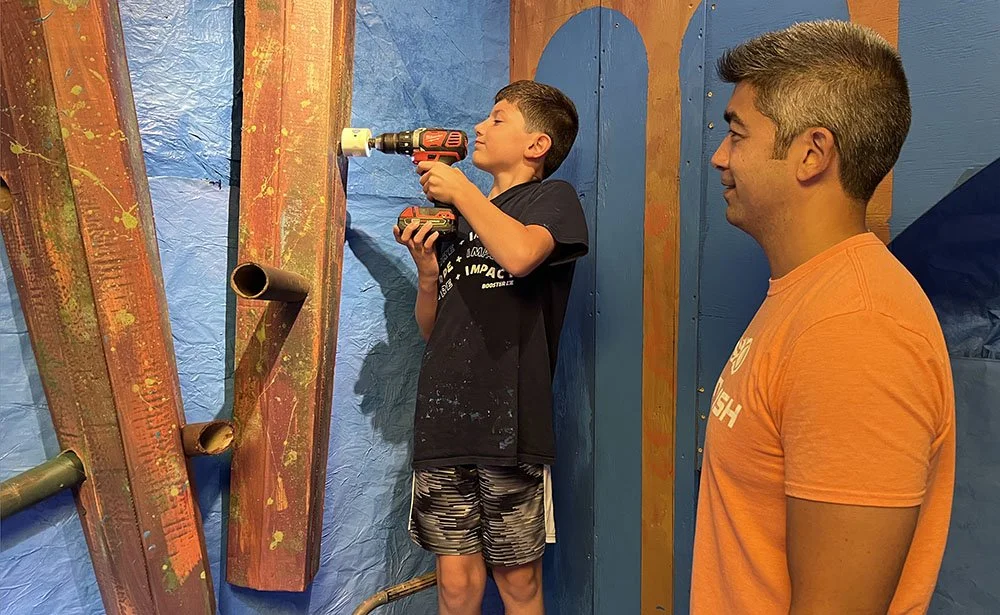
Our multi-generational installation team experienced the power of the group mind when our collaboration generated unique solutions that went way beyond our individual ideas. In addition, we all learned a lot about using tools and materials.
Welcome back to Kenzie, who created the mural for the back wall of last year’s installation, and is now a mural painter with Mural Arts!
Our Wissahickon Valley Park
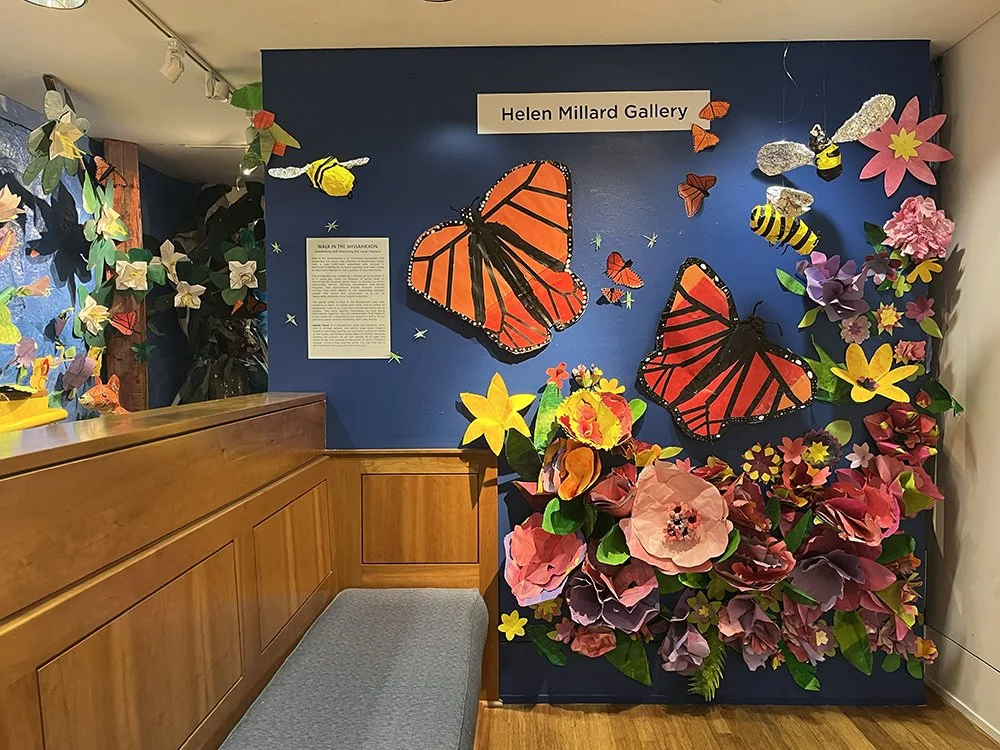
We wanted to start our installation with the abundance of summer, the season of art camp, and with the cycle of pollination.
It was exciting to see monarch butterflies and rhododendron flowers in such a wide range of sizes.
Jelani designed his big butterfly to go in this particular place, so we could have a dramatic opening for our installation.
As part of my residency at H.A. Brown Elementary School, second graders made trillium, trout lilies, Virginia bluebells, and bees to pollinate them,
This residency was part of second grade artists’ Interdisciplinary study of pollination. It included growing plants from seeds, doing research, and writing and illustrating books about what they had learned.
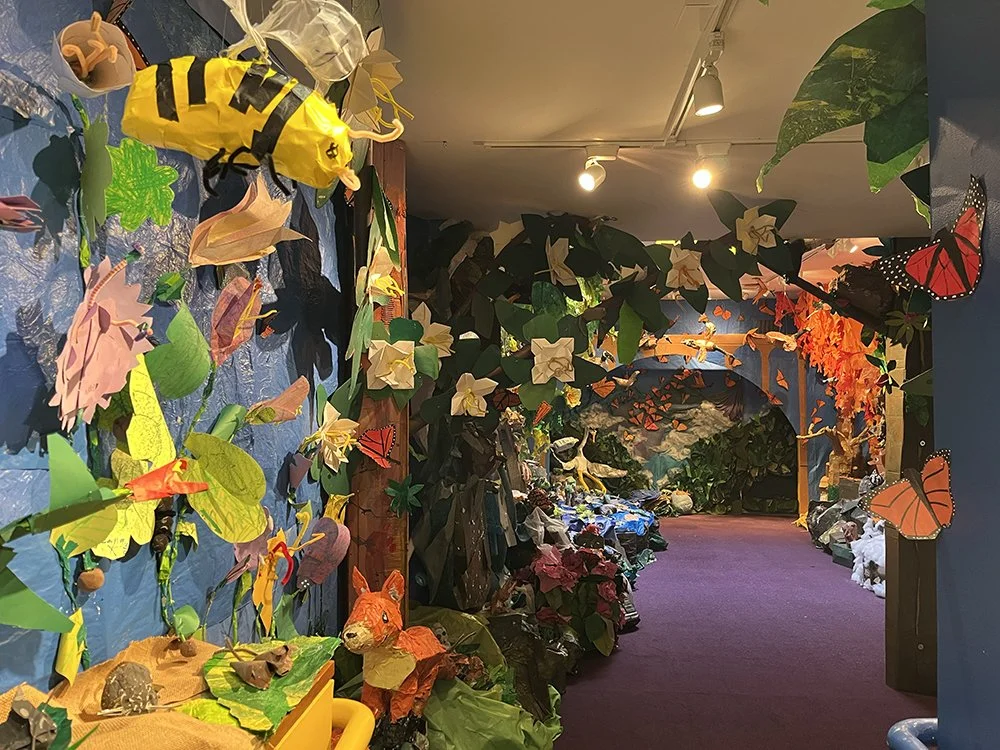
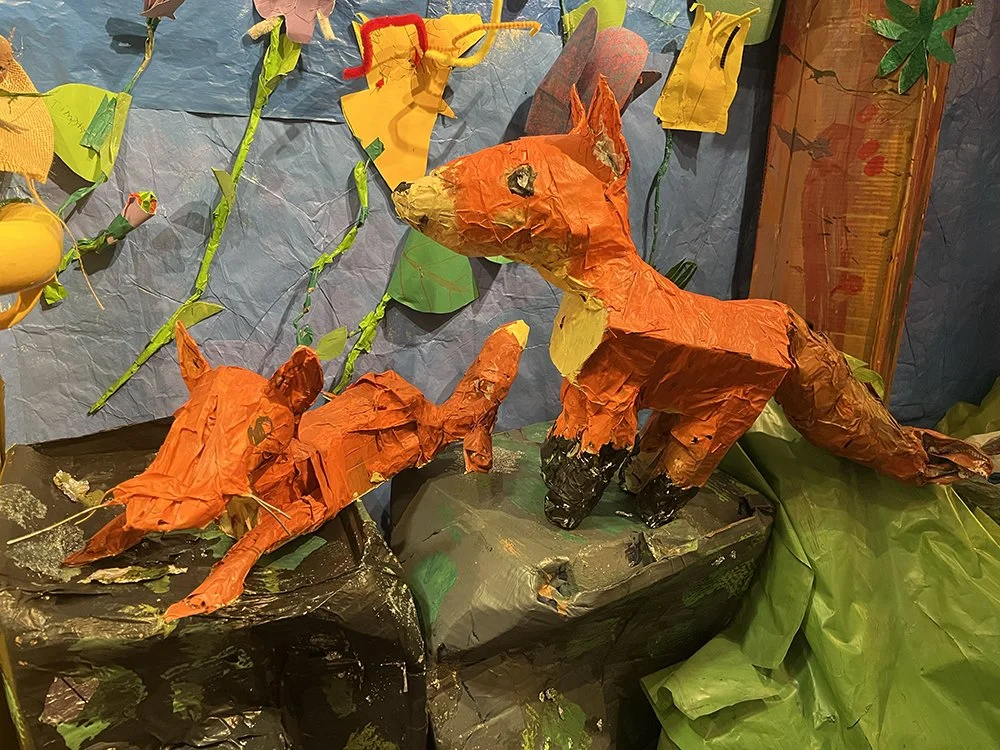
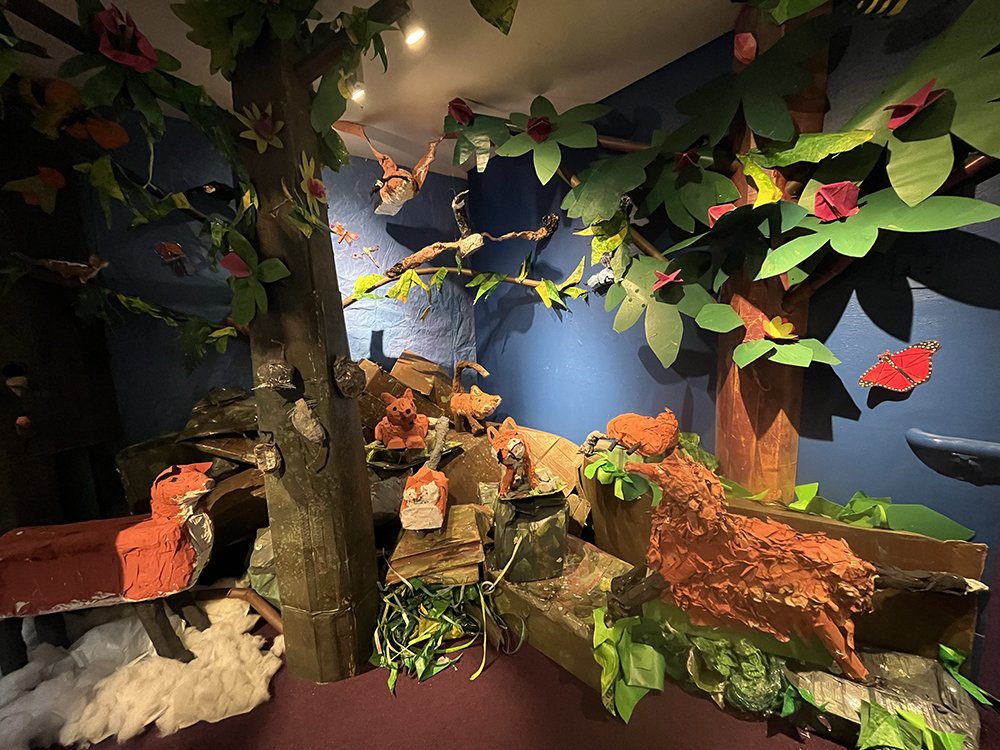
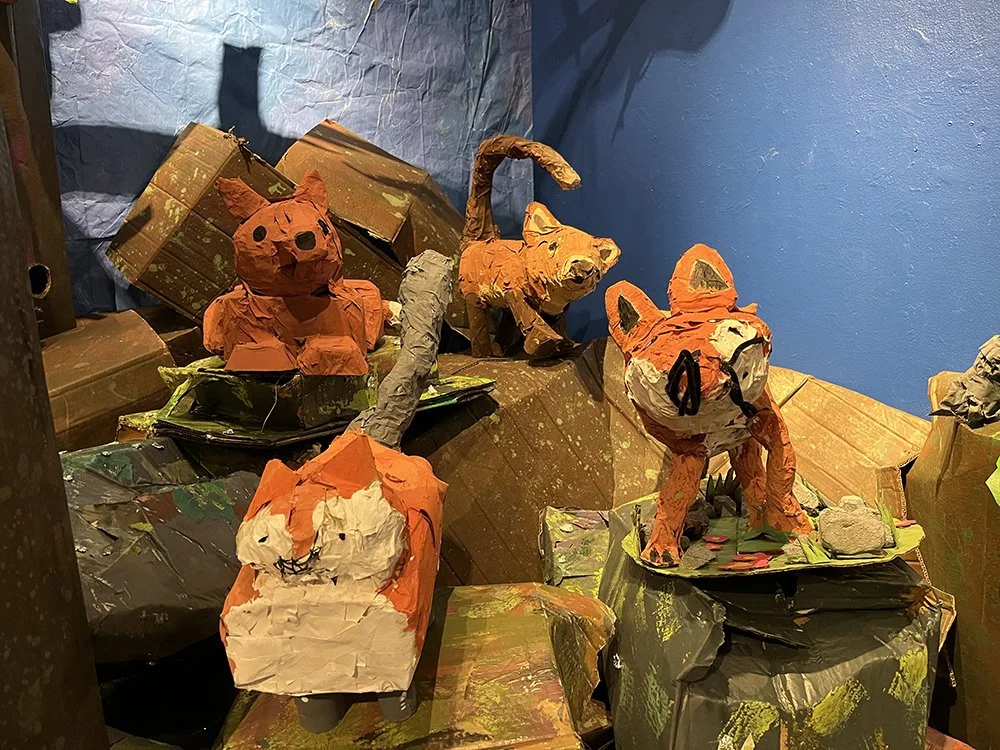
We all fell in love with fox kits! These two were made in a collaboration between a middle school artist and a high school artist.
Young artists invented a way to make origami blossoms for our umbrella magnolia tree.
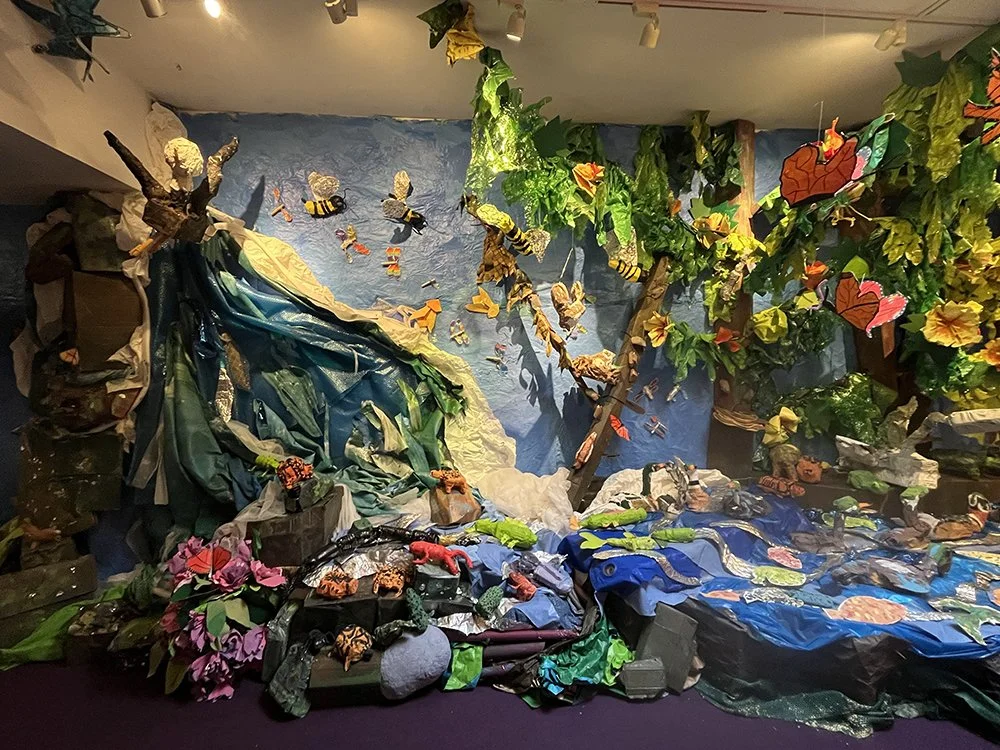
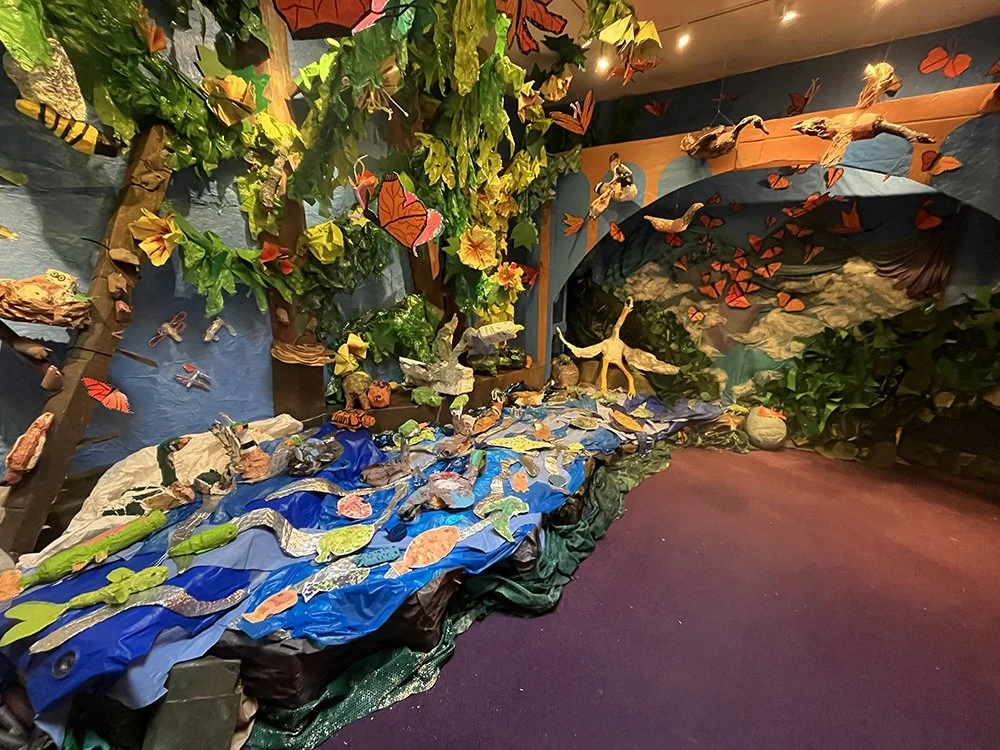
Behind the magnolia tree, the Wissahickon creek tumbles down.
The water falls into a creek bed made of the schist Wissahickon Valley Park is famous for, while a bald eagle flies above.
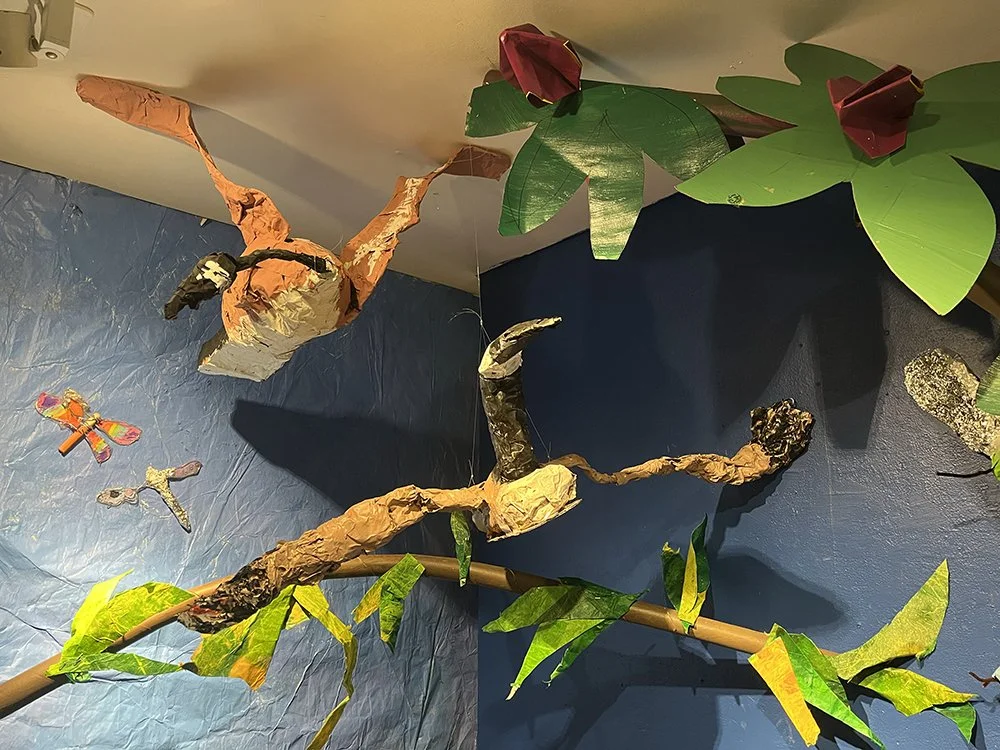
A family of owls makes its nest in the crotch of a tulip poplar tree.
Trout, bass, and catfish swim in the creek, while American bullfrogs, green frogs, and Eastern box turtles clamber on rocks.
The iconic Henry Avenue Bridge is the backdrop for the change of seasons and migrating Canadian geese.
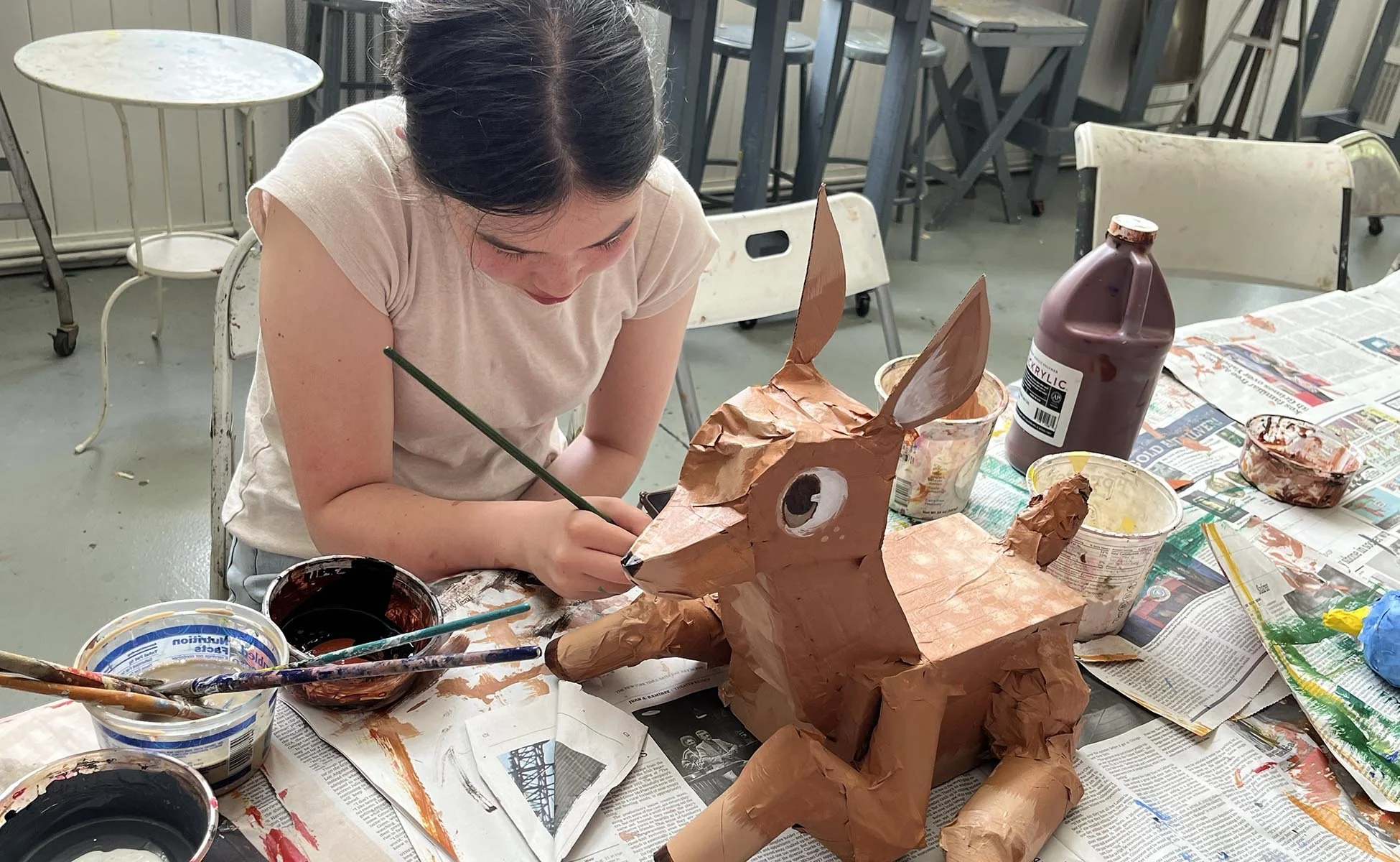
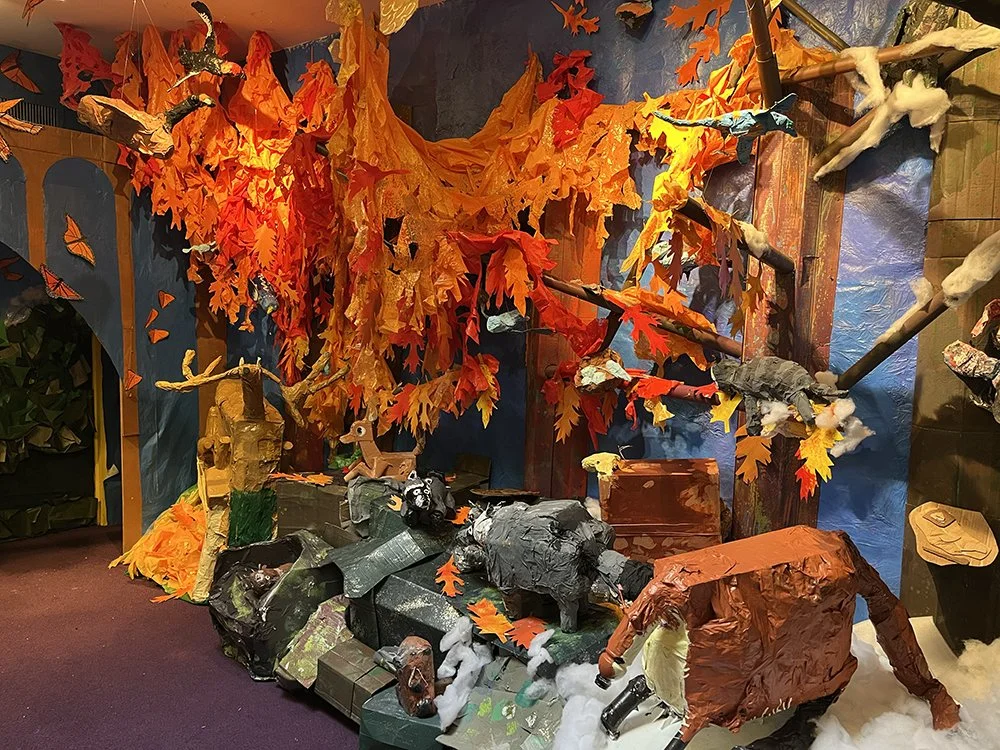
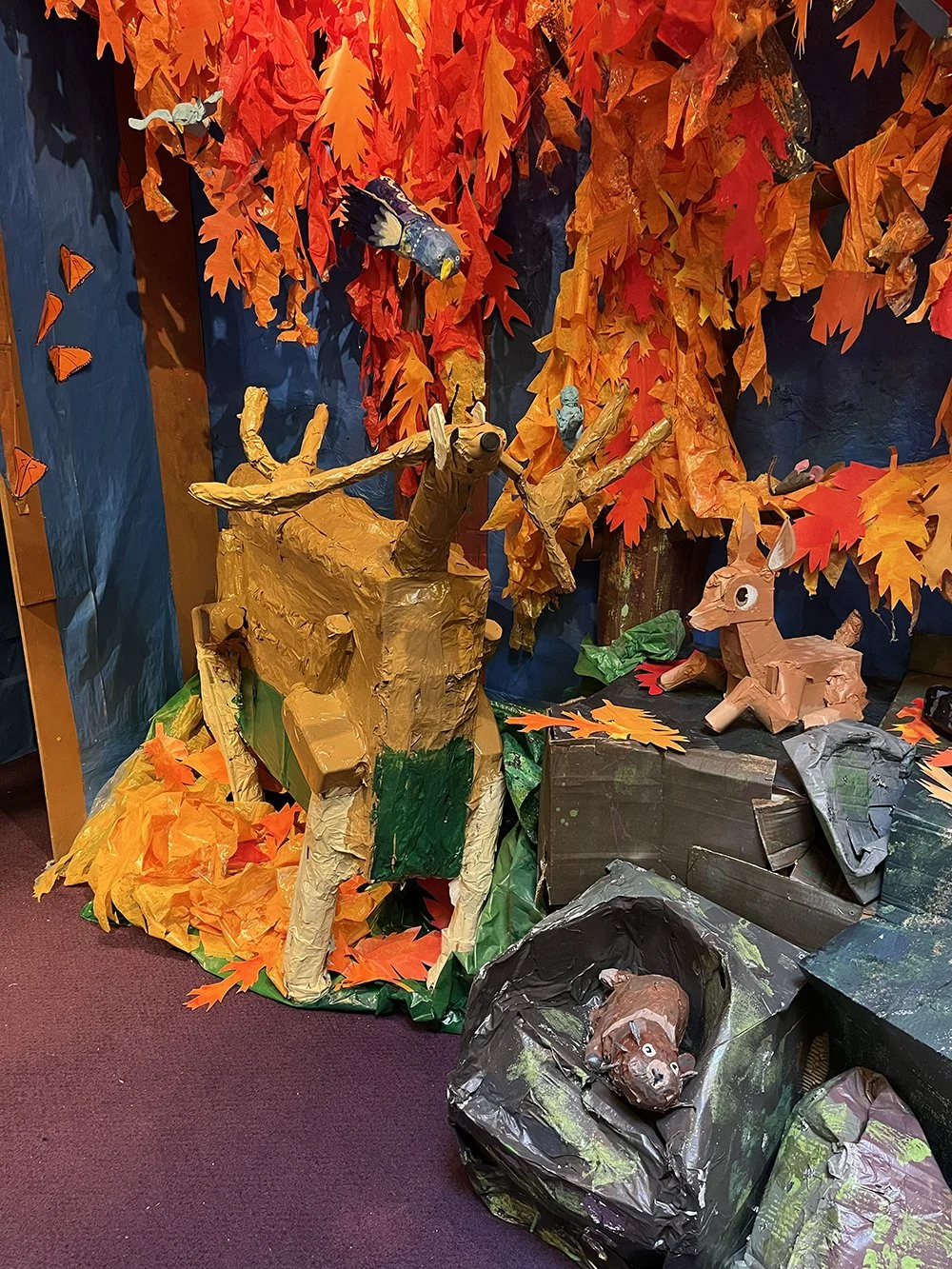
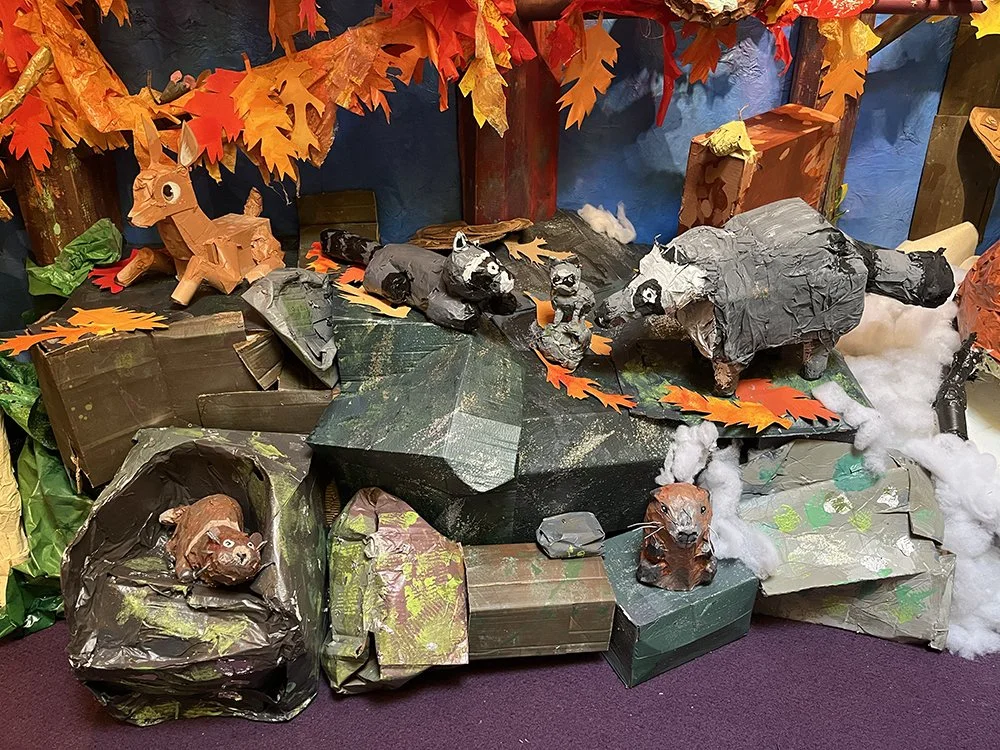
Brayden spent close to a year methodically engineering and building this almost life-size deer.
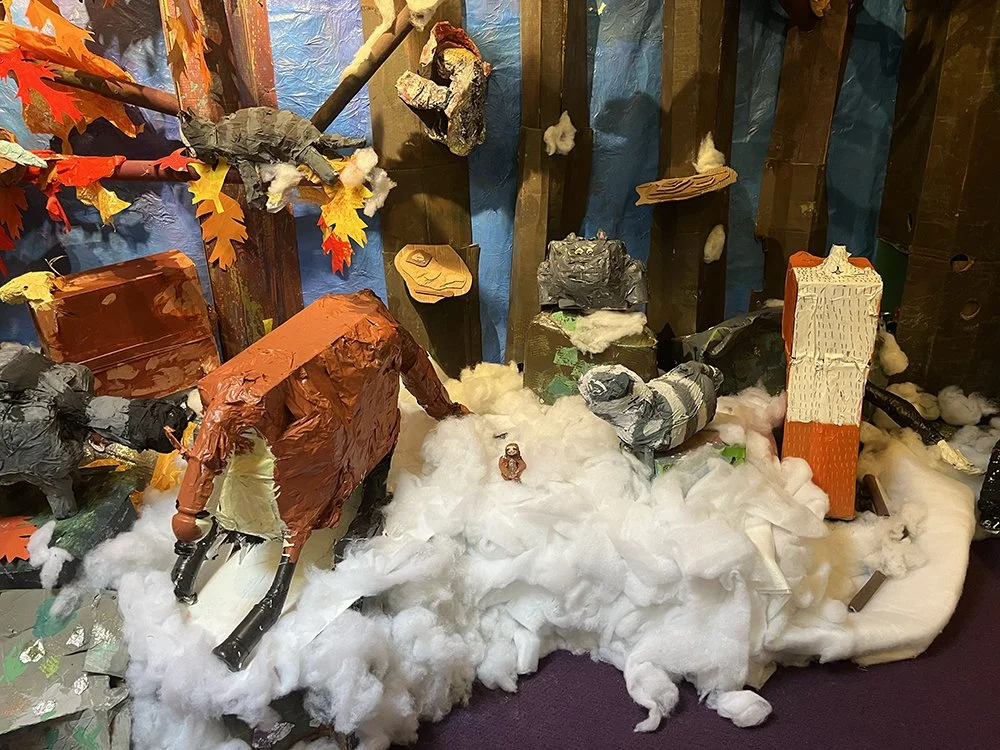
Groundhogs and a family of racoons nestle in the rocks.
As winter comes, leaves fall from trees, and deer, foxes, and other critters enjoy the snow.
A great horned owl hovers above a blue bunting, a blue jay, and the rest of the winter forest.
Spring brings new life, including pink blossoms on the same kind of umbrella magnolia that opened the installation.
Fox families grow as a new generation of fox kits is born and plays on the rocks.
Canadian geese return. We’ve completed the cycle of the seasons.
Thanks for sharing the Wissahickon with us! We hope you loved seeing this installation as much as we loved creating it.
We hope it inspires you to appreciate and care for Wissahickon Valley Park, a unique gem of nature right in our own neighborhood.